Showing posts with label death. Show all posts

Friday, 7 October 2011

COLLAPSE

//////////////////////////////////////////////////
CARBON-CAPTURE-PROJECT-LONGANNET-COLLAPSE?NEWSFEED=TRUE
//////////////////////////////////////////////////


///////////http://www.guardian.co.uk/environment/2011/oct/06/carbon-capture-project-longannet-collapse?newsfeed=true...

<<<<<<<<
--------------------------------------------------- 
Flagship UK carbon capture project 'close to collapse'  
Scottish Power expected to pull out of government-promoted scheme to build a £1bn prototype CCS plant at Longannet
Terry Macalister and Damian Carrington
guardian.co.uk, Thursday 6 October 2011 15.32 BST

---------------------------------------------------
A £1bn flagship government project for fighting climate change – the construction of a prototype carbon capture and storage (CCS) project at Longannet in Scotland – is on the verge of collapse, it emerged on Thursday. Talks between the Department of Energy and Climate Change (Decc) and Scottish Power have run into deep trouble and the electricity supplier is expected to pull the plug on the government-promoted scheme, which hoped to bury carbon emissions from the coal power station in the North Sea. [...]


 Decc had promised £1bn of public money but the developers are understood to be arguing that they cannot proceed without more money to trial the scheme, close to the Firth of Forth. Both sides insist "talks are ongoing" but well-placed industry and political sources say the process is "pretty much over" and a statement to that effect could be expected shortly. Jeff Chapman, the chief executive of theCarbon Capture and Storage Association, said the collapse of the Longannet scheme would be a "severe disappointment" for the wider hopes of the sector. "Everybody knows the negotiations have been very difficult, so to that extent it's quite possible [the talks] don't come to a conclusion – although there are other projects coming through the system hopefully."  [...]


 The Fife scheme was by far the most advanced and spearheaded the drive to develop this new technology in Britain. Ministers have repeatedly stressed the importance of CCS as a way of keeping coal and potentially other fossil-fuel burning power stations in operation without undermining moves to cut CO2. Longannet is the third largest coal-fired power station in Europe at 2,400MW and was once highlighted as Scotland's biggest single polluter.

>>>>>>>>>>>


\\\\\\\\\\\\\\\\\\\\\\\\\\\\\\\\\\\\\\\\\\\\\\\\\\\\\\\\


-------§§§-------

Three mega-rich (at least one of them giga-rich) capitalists of Aberdeen. Standing at the head of their multiple boardroom tables in the town which styles itself the 'Energy Capital of Europe' they are watching as this scheme to neutralise the atmosphere-menacing emissions of Europe third's largest coal-burning power-station - Scotland's biggest polluter - collapses. This project to neuter its teratogenic discharges lies close to breakdown for want of an investment shortfall - the sum of which would be less than one tenth of this cadre's aggregate net worth. That is; this project does not want for material, or know-how, or industrial capacity: no, it fails for lack of the trivial fiction of cash-money.

For this novel technology (while scientifically simple) remains commercially unproven; it is a business risk; the financial returns are uncertain. For this pecuniary reason alone - despite its promise of continual gigawatts (but scrubbed, guilt-free, of harmful carbon) from the 50-year-yet certain supply of global coal - no power station anywhere in the world has a full-scale carbon capture and storage system running. No-one yet knows just how much it will cost to clean up electricity which is manufactured from coal. No-one yet knows how much (or how little) profit is to be made.

In this town, we have a large workforce of innovative technologists and engineers with the skills and experience necessary to design, manufacture and operate systems like these. The wrangling of high-pressure gas, fluid and plasma is very much our stock-in-trade. And in our oil tycoons, we have the capital which, if deployed into these low- and no- carbon electricity and motive power sources (of which CCS is just one) would truly, finally change this town's self-styled moniker from "Oil Capital" to "Energy Capital" and so at last give truth to the conceit. 

Now, today, we all stand at the crossroads. Will these men mobilise their capital - are they prepared to take the risk? Much is made by the PR agencies they retain of their philanthropic credentials. What could be more humanity-loving than risking a small part of their capital on a chance to safeguard the atmosphere? Or is the one-way-bet certainty afforded by an oil-price which, despite globally defective demand; despite recession or depression, remains proudly above the psychologically significant $100 per barrel mark distracting them?

Flashing in their minds like the urgent "HOLD NOW" buttons of a slot machine stuck on a jackpot payout, this ton-high oil price militates against any thought of reallocation of capital crossing the minds of the tycoons. The certain play of continued and renewed investment in the oil-bearing strata beneath the seas of the UK's continental shelf satisfies the needs of capital oh so much more than adequately. Why would capital (the need to increase itself being its primary reason for existing - integral to its true definition) redeploy away from so certain a one-way bet into something risky?

The tycoons stand at the heads of their boardroom tables, their hands on the levers of capital. The tickers tick up on global heat budget, CO2 concentration, social inequality, species extinction, deforestation, ocean acidification, resource depletion and political instability and conflict. But the ticker also ticks up - ever up - on the free-market price of a barrel of oil. The tycoons have their hands on the control levers of capital. But they have feet of clay.


-------oo0oo-------


  1.
/NATURAL RESERVE/


Profile: Ian Suttie, the tycoon with natural reserve

Published Date: 02 October 2011
HE IS the stealth bomber of Scottish business, appearing only rarely on to the radar screen of public consciousness before quickly disappearing. And that, by and large, is the way Ian Suttie likes it. But all that changed last week when a major oil find in the Kraken field, 88 miles off Shetland, by Aberdeen-based First Oil put Suttie at the top of Scotland's rich list. With one positive North Sea seismograph, he was catapulted out of the business sections of newspapers and on to the front pages. 

For an oil tycoon with 40 directorships whose company's 30 per cent stake in the Kraken field means he is now reputed to be worth more than a billion pounds, remarkably little is known about Suttie. Indeed, Suttie is said to regard the prospect of becoming public property with unalloyed horror. An oilman who worked with him said he's "not exactly reclusive, but he's not far off it - he's very private".


\\\\\\\\\\\\\\\\\\\\\\\\\\\\\\\\\\\\\\\\\\\\\\\\\\\\\\\\


2.
/ONE OF A KIND/


Jimmy Milne - A journey there and back again


“I was born on Boxing Day and have been fighting for existence ever since,” he says.
Milne [Balmoral Group chairman] celebrated his 70th birthday last year but to suggest that it might be time to ease up risks permanent impairment by the Samurai sword which sits beside his desk.
“I still feel like a 20-year-old most days and I still have a spring in my step and fire in my belly.
“I am driven by throwing back the frontiers of technology and always trying to beat the biggest and the best in the world. That’s what gets me out of bed in the morning.
“I can’t stand anyone saying ‘Jim I can’t do this.’ I say let’s just start again. Let’s get rid of the ‘t’ because there is always a way of doing it. I really believe in positive thinking and positive action and with that you can literally shift mountains. Another thing I can’t stand is people coming to me and saying ‘I tried the best I could.’
“Winston Churchill said that to try your best is not good enough - you have to go out and achieve what has to be achieved and there is a gulf of a difference between these mindsets.
“I don’t take no for an answer and I will never give up – but it is not just Jimmy Milne. I drive it but I have a terrific team of guys, very loyal and hard working who take pride in Balmoral and what we do but we never get complacent.
“My first employee is still with me and we have 54 long term members of staff and more than 1000 man-years of polymer experience - and that’s not just me!”
He has no doubt that the hard work ethic goes back to his childhood on the farm.


Demand for oil and gas pulls energy sector through recession
Although the oil and gas industry has been affected by the global economic slowdown the energy sector tends to work in longer-term cycles. This is particularly true of deepwater operations. The demand for hydrocarbon-based energy is continually increasing and this has pushed the industry into new territories and ever deeper waters. As a result of continuous exploration and production activity much of the offshore supply chain has remained relatively well protected from the worst ravages of recession. Despite the economic slowdown Balmoral Offshore Engineering’s international business has increased exponentially between 2007 and 2010 We are delighted that the industry is showing its faith in us as a premium provider of high quality, reliable products and have been successful in securing significant contracts for some of the industry’s most prestigious global deepwater provinces. To cope with the increasing demand we are investing heavily in a new manufacturing plant in Brazil 

Jim Milne CBE, Chairman and Managing Director, Balmoral Group 

\\\\\\\\\\\\\\\\\\\\\\\\\\\\\\\\\\\\\\\\\\\\\\\\\\\\\\\\


3.
/NORTHERNMOST TYCOON/
/LOOKS BEYOND OIL/


In the school of hard Knox: Sir Ian Wood: Britain's northernmost tycoon looks beyond oil. 
[...]
Sir Ian is proud of the Granite City. Once it had realised the opportunities of oil, he says, it did the right things. 'It would be wrong to say it would all have happened anyway. The business could have gone to Dundee or elsewhere. The harbour has been rebuilt, and the local civic leaders did what they could to encourage development. That is very much to their credit.'
Now he feels his job is to make sure Aberdeen does not drift back into economic obscurity. 'We're the lucky generation of north-east Scotland,' he says. 'I'd hate the next generation to look back and say,
 "Well, what did you leave us?" '

\\\\\\\\\\\\\\\\\\\\\\\\\\\\\\\\\\\\\\\\\\\\\\\\\\\\\\\\


Wednesday, 24 August 2011

Poxy-metal


 <<<<<<<<
[...]
When I returned to the Piper Alpha garden, all the gardeners had gone. There was peace and space and air and light in which I could now contemplate the memorial, its 168 engraved names, that dreadful night.
Then I began to remember.
Then I remembered something of that time...
>>>>>>>>>
----------/////////----------


...Then I remembered something of that time.

All those years ago. Another life, in another time, I worked for an engineering consultancy in the North Sea oil and gas industry. In those days following the Piper Alpha disaster, at the fag-end of the 1980's, something new was happening with young people. Out of the London suburbs and the empty warehouses of economic decline had come the acid house rave culture. And in this town too, the drugdance fever hit: The former post-punk alternative and indie club culture mixed with the nascent hip-hop upwellings and we danced and we danced and we danced. Thursday to Sunday we danced. But this life needed funding, and funding was available from the shiny engineering consultancies of the dirty oil industry. All suited up, ties tied, shoes laced, collars buttoned-down, it was quite common - more than common; it was inevitable - that you would come across fellow ravers working in drawing offices or oilco technical libraries, print rooms, server rooms and the like. Self-employed contractors we were; junior engineers, tech clerks, tracers, data input operators, dye-line printers, hot-shot document couriers in rented saloons, coining it in through the day and necking the eckies when the sun went down. A knowing nod across a drawing office on Thursday afternoon was then later a roar of recognition and a huge hug on the dancefloor on Friday night. An expensive life for young people to lead, clubbing every night - so we funded it right out of the pockets of the oil companies, for that year the offshore disaster had blown an ill-windfall bonanza for those in the right place to harvest it.

The consultancy I worked for in the year following the Piper disaster was contracted by the company Occidental itself - operators of the ill-fated platform where 168 had died on that one awful night. We were contracted to audit and remediate the working practices and equipment on their Claymore gas production platform which was similar in layout and operation to Piper. Occidental - the company had once been know affectionately as 'Oxy' - unsurprisingly had a big PR problem in this town after the disaster. Rightly or wrongly they were seen as liable, as criminal. They were seen as having caused the deaths. They became known around town as 'Poxy' or 'Poxy-metal'. At best they were known as 'Accidental'. If you say "Occidental" in a slack-jawed Texan drawl, it sounds like "Accidental", so this bit of cheek you could pull off in front of the companymen's faces while retaining plausible deniability. Not that they would ever again dare challenge a 'local', for power had shifted in the wake of the tragedy. They had a desperate need to be seen to be doing the right thing, and so, when they let their 'right thing' contracts, money was no object, and they let them locally.

Occidental was unusual in the oil industry by being about the last of the truly independent oil companies. While it's stock was traded, it remained under the majority control of one man, a second-generation Ukrainian New York immigrant called Armand Hammer. Having spent years adventuring in the newly-formed Soviet Union during the 1920's supposedly looking for the lost Romanov treasure (but truly no doubt on the payroll of the US secret service - more on this later... ), Hammer became personal friends with Lenin. Hammer used to boast that one fine day Lenin took him to a mountaintop and, gesturing to the unspoiled vastness of all the Russias below, offered him exclusive rights for mineral exploitation in the Soviet Union. Whatever the truth of this, the similarity to the bible tale of Satan tempting Jesus is both striking and telling. In any event, Hammer did not go on to exploit the geological wealth of the Soviet Union; rather, he founded a high quality pencil manufacturing company which competed indigenous Russian manufacturers out of business. Hammer's pencil company received the Huge Central Annual Stationery Order of the Soviets, worth millions of rubles in gold. Gold which he then immediately exported to the US and parleyed into control of Occidental Petroleum.  

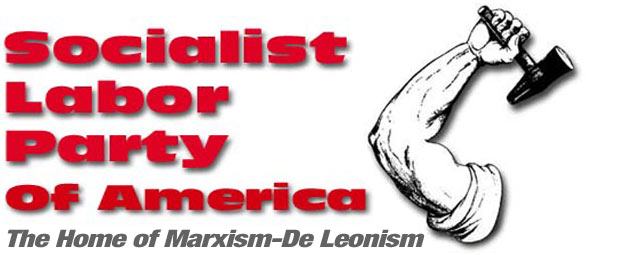
Genuinely a remarkable and complex character, Armand Hammer, it seems, was named after the 'Arm and Hammer' symbol which was the symbol of the Socialist Labor Party of America, of which his father was a leading agitator. Indeed Hammer senior led the splinter group fraction from that party which went on to become the nugatory foundation of the Communist Party USA. We should place Hammer's Soviet links, adventures and fortune in this context and, skating all too quickly over the surface of that frozen yet deep pond, reassess our earlier assertion that Hammer's US ties were those that bound him during his early Soviet buccaneering. The irony that Armand Hammer would one day control the company (Church and Dwight) which owned the 'Arm and Hammer' domestic chemical brand - best known in this country for bicarbonate of soda toothpaste - with its trademark iconography being identical to both that of US socialism and one of the symbols of world-wide freemasonry - would surely not have been lost on such a complicated man. 

During the first flush of our town's oil-boom, Hammer would have his private airliner piloted into Dyce, where he would be met on the tarmac by chained Provost and kilted piper before being whisked to a site north of Bridge of Don. Once de-limo'ed, he would then wander around the scrubland pointing with shooting-stick at this feature and that, planning the building of his 'Caledonia' HQ. Here the office block campus with its bronze-mirrored corridors and half-carpeted internal partition walls; there the comms tower with its direct line-of sight (for microwave telemetry and control) over and across Aberdeen bay to the Piper and Claymore oilfields some 120 miles away to the north-east. Hammer was in his element. He could not know what was to happen, how badly it would end for him and his company here. 

I remember that the oil price was actually rather low at the time, during that year after the Piper disaster, but I also remember that the consultancies around town were busy-busy nonetheless. The disaster had meant that the industry urgently needed to take a painful and honest good look at itself, lest similar happen again. The oil companies were all staring into the Piper abyss and thinking: "There but for the grace of God...", so they all really needed this work done. And because the work itself was a bit of a reflexive strange loop - being largely comprised of defining what the workscope was - contracts were let on a 'cost plus' basis. Which is to say that the contract sum - the final total - was left open-ended, undefined. Rather, the consultancies would, at the end of each month, summarise their costs - mostly labour, but also stationery (heh), mileage, subsistence and whateverelse you thought you could get away with - add on a percentage (usually 20%), add on VAT (at the time, 12.5%) and invoice the oilco, who would then pay up the following month. I never once remember an invoice being questioned. The temptation to pad these invoices with extra hours or miles or print runs or whatever, was, of course, overwhelming. And as the consultancy I worked for was contracted by Occidental, it became almost a duty for us to give in to this temptation; to chisel and chisel and chisel some more out of the 'Accidental' killers. At all levels, from board members to tea-ladies we plundered the hapless outsiders. With glee we took our pencil-necked revenge-by-proxy through our timesheets and expense claims, our invoices and our indents. 

The consultancy grew quickly as we took on more and more contractors, more and more bodies in the drawing offices and engineers' ateliers to subcontract out to the Oxy job cost-plus money machine. Day-rates ballooned and word got round. Draughtsmen and engineers who had until earlier that year been making an OK-enough and secure salary in the Donside papermills, Belfast shipyards, Sellafield nuke plants, came to work for us on day-rate. A night shift was instituted. We paid them handsomely and all from Armand Hammer's fortune. There was plenty work to go round on the Oxy job. We were spreading the wealth and a party atmosphere pervaded our consultancy. The company tripled in size over about six months. A move first to overflow portacabin accommodation on the Altens Industrial Estate site, then overflowed to hotel suites at the four-star Skean Dhu, then settling to sexy high tech offices in the city centre.

As the company grew, it also grew its own culture and group of young engineers and clerks within the consultancy set up a satirical review newsletter which very quickly grew beyond its initial aims. At times very close to the knuckle, this 'Private Eye for the North Sea' circulated well beyond our own company, becoming a clearinghouse for anonymous whistleblowing; exposing unsafe practices offshore and mercilessly lampooning individuals and oil companies involved in industrial accidents, oilspills, corruption, anti-union activity and the like and the inevitable subsequent coverups. Produced by individuals who nurtured their plausible deniability carefully, overnight the newsletter just appeared on your desk photocopied and stapled (sometimes comb-bound? With an acetate cover? Maybe.) This was before the advent of desktop email so this newsletter was a real physical item, with actual costs involved in its production. Who was to pay these costs?

At board level an inquiry was convened... It is interesting to note that the content of the newsletter was not questioned - demonstrating tacit approval for whistleblowing in the wake of serious loss of life; good. But pencil-necked businessmen being pencil-necked businessmen, the money question had to be asked: The chairman puffed his panatella and pushed the satirical-serious pages away from him across the dark teak. He placed the cigar in the brass ashtray to his left and sipped a little malt from the lead-crystal tumbler in front of him. An intake of breath through teeth. Leaning over and back, he whispered to the minute-secretary to put down her pencil and pad. Then, elbows on the high-lustre polished table, he steepled his fingers below his chin and raised his bushy eyebrows high into his balded brow: 
"Ahem, very good. But... er, who's paying for the printing?"
His right-hand man, the Managing Director - his old university friend with whom together they had set up partnership and formed the company way way back in the heady new days of Forties and Brent - provided the answer. For, of course, to ask the question - that day in 1989 in that post-Piper context - to ask the question was to answer it:
"Who's paying? Why - Oxy, of course!"

--------oo0oo--------


With respect. 
This post is dedicated to the dead, in the 
hope that such a workplace tragedy can never happen again.


----------/////////----------

Tuesday, 23 August 2011

Hazlehead Externalities


---§§§---

Long before you can see it, you can smell it; the outdoor odour of hot fried onions being remarkably similar to that of unwashed underarm sweat. Before you can see it, you can hear it; the diesel genny's farting thrum is no respecter of horticultural serenity. Those canned drinks have just godda be served cold!


The school term having just started, and this visit being made at lunchtime, many children from Hazlehead Academy (those both in the know and in the money) were seen queueing for their quarterpounder cheezeburgers and chips and Coke. All children being willing addicts of these foodstuffs, their preference is bound to run to the burgervan over municipal school dinners. 

And we wonder: is that OK? Did the process of awarding this catering concession take this into account? Or is it an unforeseen consequence. And we wonder, as we would, how did this concession come to be awarded to the burgervan of 'Monster Catering'; how much do they pay and to what controls are they subject? And in any case, just who exactly is the customer here? Which party is providing the feed and which party is the consumer?


And we wonder why the already existing modernist snack kiosk, only ten yards from the burgervan - with its already-plumbed and wired services cannot be used by the concessionaire. Indeed, we wonder what has happened to the once stately café, now boarded up and seemingly abandoned, where friends enjoyed French fancies not four months ago. It is said that the market serves all needs. And the burgers are good (not to try is not to know) and the schoolkids are very happy today. But it is clear from the scenario playing out in our town's Hazlehead park that the market both discounts the future and ignores inconvenient externalities.


If you turn your back on the noise and smell of the burgervan and walk past the soon to be derelict restaurant café, (its unique jasmine planting commemorates the pro-democracy struggle of Burmese political activist Aung San Suu Kyi), there, near a car-park you'll find a garden of stonework pods which show historical episodes from the life of Robert the Bruce in concrete-pressed bas-relief. And to think - Councillor Kevin Stewart, when he commissioned that new statue which sits outside Marischal College said that the town had no commemoration of The Bruce! It is particularly interesting to note that one of the reliefs actually has the courage to depict the historically difficult 'Harrying of Buchan' episode, though we don't think it quite manages to do justice to the full extent of the ethnic cleansing genocide, systematic rape and managed campaign of terror, demolition, fire-raising and eradication meted out to the people of this region by Bruce. Shame.


Although much of the park is already derelict and not open, if you continue walking west past what we understand is the second-largest municipal maze in the UK (now free entry, yay!) you'll walk through some well-tended gardens, putting greens, sculpture courts. And at last, the smell of the burgervan and the noise of its noxious generator fades, to be overridden by the spicy fragrance of rhododendron and the twittering of little birds respectively. 


But the Queen Mother garden is suffering from austerity cut-backs.


But next plot to that, the Piper Alpha memorial garden is in good shape. Like the Queen Mother garden, it's the sort of formally laid-out rose-garden very common in Scotland, and that's OK. No risks were taken, no-one was offended.


If any readers don't know about the Piper Alpha disaster, click here.


The Piper Alpha memorial sculpture is emotionally engaging and moving. The three figures, with their attitudes, gestures and clothing, are replete with meaning and symbology. In a still moment, alone with the sculpture, you might just begin notice the tiny things which our photos cannot show. You might begin to feel stuff. If you're old enough, you'll remember stuff. 

But when these photos were taken, the Piper Alpha garden was being tended by two municipal gardeners who had a portable radio with them. Its ill-tuned pop channel was crepitating a cacophonic dancefloor remix of Jerry Rafferty's 'Baker Street' across the formal beds. I did my best to ignore it and took some more photos. A third gardener, older, appeared. Brown-sharn-smudged high-visibility tabard and trousers orange and lemon - suddenly framed at the entrance to the rose garden - he suddenly appeared and started hollering at the other two. Something to do with the order in which they were doing the work, or they were doing it all wrong or something, I don't know. The two with the radio started gesturing obscenely and taunting the newcomer, taking the piss, humiliating him. This sent him into a rage and his shouts became louder and more indignant. The two turned off their radio, the better to hear and laugh at the exhortations of the third who was by now charging towards them, waving his arms about, an incoherent stream of invective issuing from his spittle-flecked lips. Thinking it best not to intrude upon private grief, I withdrew back to the Queen Mother garden, and mooched around for a few minutes. 


When I returned to the Piper Alpha garden, all the gardeners had gone. There was peace and space and air and light in which I could now contemplate the memorial, its 168 engraved names, that dreadful night. 


Then I began to remember.

Then I remembered something of that time...

----------/////////----------


With thanks to reader Peter
for the inspiration and ideas which led to this post

Tuesday, 26 July 2011

Willingly Afeared in Aberdeen


---------±±§±±---------


Reader Comment

... the general thrust of fascism is that the rapidly expanding capacity of the bureaucratic state to discipline and regulate its citizenry can and ought to be used to the utmost to create a rigidly hierarchal, homogenized and cohesive populace.

>>>>>>>>>

STV LOCAL (TV NEWS)
Norway killer had BP Aberdeen base as a 'target'
Anders Behring Breivik included BP's headquarters in Aberdeen on a list of places to attack included in his infamous 'manifesto' 

>>>>>>>>>>>>>>>

PRESS & JOURNAL (LOCAL MORNING NEWSPAPER)
gunman’s internet manifesto revealed north sea rigs were prime targets
BP’s north-east HQ was on mass killer’s terror hit-list

>>>>>>>>>

EVENING EXPRESS (LOCAL EVENING NEWSPAPER)
Warning to public after Norwegian massacre
Top Grampian policeman says public must stay alert
A SENIOR police officer today warned people across the Aberdeen area to be ever alert to the threat of terrorism following the massacre in Norway.
[...]
Aberdeen terrorism expert Professor David Capitanchik of Robert Gordon University [added] that Aberdeen remained “vulnerable” to terrorist attacks.


---oooo0oooo---

We couldn't help but notice and so be disgusted and sickened by a sort of self-important self-satisfied glee leaking out at the edges of these local reports. A perverse delight in the fact that mention in that madman's 1500 pages of racist paranoid rage somehow puts Aberdeen on the map, and is therefore something to be slyly happy about while nodding sagely and making all the right noises and hand-wringing gestures. 

But these local press and TV reporters are merely sensationalising, and, more seriously and to our great dismay, in doing so are tipping us all into an illiberal trap. Their headlines are only true on the margins, and then with a fair bit of interpretation. To report that the killer Breivik had identified Oilco BP's Dyce HQ as a 'target' is no more true (nor, indeed, false) than to say that 'Paris' or 'Literature Festivals', or all oil refineries everywhere in the EU, were included in an extensive list of infrastructural, cultural, economic, political and social 'targets' which also encompassed every single commercial electricity supply nuclear reactor in Western Europe, all mainstream political parties of both left and right in all EU countries, "Royal Castles" and even Wikipedia.

Our local press, by their willingness to propagate such sensasionalised reportage are acting as 'useful idiots' and delivering us directly into the type of hypersecurity state of which the murderous far-right terrorist Breivik would no doubt heartily approve.


>>>>>>>>>>>>>

Saul Newman
The Politics of Post-anarchism


The logic of security itself, which has become so ubiquitous and omnipresent today, has to be seen as a mechanism of depoliticization: it is a way of imposing a certain order on social reality which is self-legitimizing and beyond question.
[...]
Today we have come to think of freedom only as strictly circumscribed by security; freedom and security become part of a binary in which the former cannot be imagined without the latter, and in which the former always gives way to the exigencies and prerogatives imposed by the latter. The liberal idea of an appropriate balance between security and liberty is an illusion. The only vision the security paradigm offers us - with its pernicious technologies and its perverse logic that grips us in a double bind - is an empty, controlled, overexposed landscape from which all hope of emancipation has faded and where all we have left to do is obsessively measure the risks posed to our lives from the ever-present specter of catastrophe. The security paradigm intensifies a micro-politics of fear, producing a kind of generalized neurosis.

<<<<<<<<<<<<


We smiled grimly when we read Newman's warnings of "self-legitimizing" security infrastructure which is "beyond question" because we had noted with the launch of the Aberdeen Business Improvement District (Aberdeen BID) business plan (PDF) that CCTV is regarded as "Baseline Service", with the only indication of the benefit its installation is supposed to confer being the solipsistic "provision of 24/7 CCTV coverage". Yes, they insist that more CCTV capacity be installed, because it will provide greater CCTV capacity.


---------±±§±±---------


Comments on Facebook "Aberdeen" Community Page and STV Local.
  • "Scary stuff! My work is just behind the BP headquarters in Dyce!"
  • "I work at BP and this is scaring the hell out of me... Hopefully adequate security is provided..."
  • "We are all really worried..."
  • "We all have to sleep with one eye open now..."


We'd like to point out to these worriers that, what with the UK being the most CCTV surveilled nation in the world (notwithstanding the possible exception of weirdo aseptic totalitarian state Singapore), there's probably nothing to fear. That is, of course, unless they have something to hide...

---oooo0oooo---


Thursday, 9 June 2011

The Roe Buck

http://committees.aberdeencity.gov.uk/mgConvert2PDF.aspx?ID=12314 
Page 469
<<<<<<<<<<<<<<<<

The type and extent of deer control measures will vary from site to site. As at Tullos Hill, the action required to reduce the amount of deer damage to acceptably low levels will necessarily include the appropriate intensity of culling on an on-going basis until trees can reach full establishment – ie beyond the height at which roe deer can cause major damage. This would cost in the region of £9000 and can be covered within the existing funding for phase 1. Erection of deer fencing is another option which may be required in some areas where on-going deer control is either impractical or otherwise unlikely to reduce grazing pressure to acceptable levels.

~~~~~~~~~~~~~~~~

>>>>>>>
>>>

He’d just been congratulating himself - it was quite early in the season to feel as fit as he did. During the appalling winter, his saddle-fitness had declined, but since the spring had come early and bright he’d managed to improve on that. Climbing the steepest hill he knew in the town; he’d managed it that day with less distress, in a higher gear, quicker and with better form than he’d done so far that year. Half way up he’d even felt good enough to kick, to dig down into reserves of strength he didn’t know he had - to spin the pedals faster and actually accelerate up the hill. That hill at the very edge of the parish boundary of his town - quite rural really - up a forestry trail to a summit with an Ordnance Survey concrete pillar trig-point on top and such a view! The hill that gathers the rain that feeds the springs that become the burn that gave his town its name and gave the town the green estuarine littoral to found itself upon all those centuries ago.

Cresting the summit and now on a plateau the cyclist knuckle-flicks the paddle to slip up a gear and relaxes, pleased with himself. Now traveling at about walking pace on the loose gravel path, heading slightly down and dead straight, increasing speed; faster now jogging pace, faster now running speed faster again faster than a runner - gravel chips pinging poing boing from beneath chunky nobbly tyres. To think: the loose-ish glacially deposited aggregate sand and gravel of this kame hill were water-bourn carried by that burn water; speck by speck, stone by stone down the valley and formed that estuary, now reclaimed beneath shopping mall and car park and railway station and road: a perfect flatland for development alongside the harbour - that harbour itself once the shifting sand estuary of a much mightier-yet watercourse, now granite pier and concrete pile contained, dredger-tamed.

Now speeding about as fast as he'd like to go for comfort and safety on the unmetalled surface - any more and his suspension-forks wouldn’t plushly absorb the bumps of the gravel and sand yet boulder-studded surface - he realises in the quiet of his outreaching thoughts that he’s not alone - something impinges on his consciousness, matching speed and direction - a flicker in the trees: the path now a fully enclosed avenue high contrast light and shadow strobe pulsing through the tree fronds hiding the sky above. Shafts of coppergold light here briefly blinding him through the slatted louvres of the pines - there illuminating the quiet dust of the still forest, suspended in the air, a moment holding its breath. That flicker in the trees, it’s real, it's alive, its a deer! On a parallel route, he can see small antlers - a buck! Matching movement through the forest. But the cyclist is a noisy fuss on a forestry road and the roe buck is effortless amongst moss and fern and boulder and trees, jinking and sidewinding - maintaining smooth forward momentum, muzzle high on this slender neck and with this jet black moist eye regarding and shadowing the cyclist’s progress, the roe buck stays with him - steady.

And then, the path gradient turns positive again, robbing both of speed, but still they shadow one another slowing to the crest, slowing, slowing together, stopping - stopped. Unclipping one foot from a pedal, the mountain biker stands as still and quiet as he can on the upward-sloping path, and the roe stops too as if somehow robbed of the impetus which earlier made him run. A living-room’s width away, the deer is just inside the margin of the trees; this body parallel to the path, this head turning to the man. A moment of complete silence. A moment of complete stillness. This moment - not enough for the man to see too deeply into these deep moist reflective big black eyes. Not enough to make a true mutual connection, not enough. But enough to for him to see that in these black moist eyes here is no human emotion - no way to ever connect. And suddenly silently these eyes are away! Turning at right angles, the parallel shadowing over, finished - the buck springs with no noise and these slenderest of neat legs over a stone dyke into a grassy field and away swift and down towards the broad valley of the ancient burn. The two part, their paths brought together by coincidence, by providence, now their routes bifurcated and branching away from each other forever.

Standing now alone, the cyclist felt a little ashamed that he should have thought himself fit, that his meaty-thigh-powered steel and aluminium contrivance should have filled him with self-congratulatory regard. For all he prided himself on being an outdoor type; of connecting with the good earth, of living the life of the world - rather than just inhabiting it; now the man realised that, compared to the roe buck, he was just a conceited dilettante, with all this weird equipment and preparations and clothes and planning. A fussy amateur, only playing at being real - only pretending to be outside. By contrast the deer was the very essence of a self-contained life without superfluity. Lean, slender, light, swift, efficient. Fit and fitting. Truly free.

For, now freed from his brief alien contact with the man, centred wholly and still within his body’s own movement, the buck’s desire line down into the valley is primordial. He is moving without moving, as water flows within itself; the buck cannot be anything other than what he is; he is integral. Just as without the water there is no watercourse, the deer is self-contained in his looping graceful curved route down across open fields following a path of least resistance with no artifice, no construction, no meaning, no implication. Nothing is wasted and nothing is superfluous. He has neither capacity for understanding any distinction between himself and the landscape through which he moves, nor way of understanding the passing of one moment to the next. For by his existence that understanding would be redundant: he is that landscape; he is that movement; he is that moment - there can be no distinction for all are one. Flashing across the field and vaulting... up, hey! Over another dyke at speed the buck somehow remains that silently moving pool of stillness, motionless in his body; moving without moving - completely fit for his surroundings and fitting them seamlessly and essentially. Providence he is, and he is subject to providence. Here is no human emotion. Here is only motionless motion.

The cyclist stood watching as the buck receded to a speck, proceeding into the depths of the valley and from this high vantage the man’s eyes flickered to the prominences which he noticed stood, seeming sentinels, either side of the valley as it descended meandering eastwards towards the town’s urban centre. On a hill to the north of the valley, a civic water supply reservoir. Looking for all the world like a truncated pyramid built by an ancient civilisation, the reservoir’s sepulchral forms devised an appropriate reflection to the modernist-style city crematorium which occupied the mirror-slope hill to the south. To the north, life-giving cool water - to the south, death and disposal in flames.

As he regarded the buildings on these slopes, and as these thoughts wandered across his mind, the cyclist realised that he’d lost sight of the buck. Try as he might, he couldn’t pick him out any more amongst the fields and dykes, hedges and copses as they spread out below him in the valley. He couldn’t see whether the roe buck would travel on the north or the south side. He couldn’t see what choice providence had made for the bifurcating future. On one branch, nurture and a plan for the future - on the other, consuming searing erasure; an end to a future.

He re-clipped his foot into the pedal, sighed deeply and pedaled on.

>>>><<<<


A version of this piece first appeared in the Aberdeen Voice citizen journalism online news and information source on 3rd June, 2011.