Showing posts with label clubs and societies. Show all posts

Friday, 6 May 2011

The Allure of Strange White Powder and "On the Hash"

Often, as we walk with purpose, or as we walk with no purpose at all other than than that which is evident, we are pulled off our intended path by something we've seen, something we've thought about and so want to investigate more closely, something interesting - something mysterious, something intriguing, something we've not yet learned about. These concentrated distractions might take us to places we might not otherwise go, to see things we might not otherwise see, to do things we might not otherwise do and meet people we might not otherwise meet. Allowing a route to be determined by this form of willfully unwilled non-determinism is the kung-fu of pathfinding which can take us well off the beaten track - over, under and through - at right-angles to more usual lines of communication.

The other day, walking from Other Aberdeen's prestigious atelier in the upscale heart of downtown Pitmuxton to a bike shop near Holburn Junction, I was pulled off my route by the psychogeographical gravity-field generated by a series of anomalous ad-hoc (and curiously transient in intent) artifacts. A mysterious white powder had been deposited in little piles in strategic locations. These extemporised powdery piles led me on, intrigued - Broomhill Road, Nellfield Place, Great Western Road. On corners, by existing street-furniture artifacts, on kerbstones and in the edge between pavement and wall; these chalky deposits were spaced at around 70 pace intervals - generally visible by line-of-sight one to the next.


I couldn't help myself - I had to follow...

Powder-led across Great Western Road and down Cuparstone Row (Cuparstone, not 'cooper...'; nothing to do with barrels - this is where they used to make cups), I began to feel a bit, well, freaked out. One of the effects which picking an implement from the psychogeographical toolbox is intended to have on your experience of the urban environment is to defamiliarise you from the surroundings which you might otherwise regard as mundane and everyday. To give you 'new eyes' with which you might discern new truths. On that day, I was already in no small way pre-disconnected from the everyday, having earlier been traced and questioned by police for the completely innocent and innocuous act of taking some photographs of an office building some weeks earlier.

So, as I followed the white-powdered road, I already felt as if I didn't belong in this town; I already felt as if I was a stranger in a strange land, as if I wasn't wanted here and as if my 'sideways' walking (and thinking) was regarded as transgressive by the rest of the people and power and capital in Aberdeen. The sun was shining, the air was warm, and so defamiliarised and disconnected was I from this local area I know so well that I felt almost as if I was abroad on holiday somewhere deeply foreign. The sort of package-holiday people take to cheap destinations with questionable regimes and a repressed polity. It felt as if following the powder trail was transgressive. And, what's more, I felt like transgressing! The crumb-trail fantasy would lead me to the resistance movement! To like minded individuals! We could help each other! I was not alone!


On and down Cuparstone Row, deep into the valley of the Justice Mill Burn (or Ferryhill Burn, or Holburn, or Howburn - suit yourself) where Union Glen dives beneath the vaults of the valley-vaulting Holburn Viaduct at the true ground level of the Malt Mill, I stopped to more closely examine a white powder deposit, in this case placed up upon a granite-rubble and lime-mortar wall (and so differentiated from the fallen blossom on the ground below). I reached out and pinched some of the soft talcum-texture particles, rubbed them between finger and thumb. I thought better of doing the cop-movie thing of putting a little on the tip of my tongue. I'm not that stupid!


Fast-thumping footfalls rushing down the steepening slope behind me, running towards me, louder - closer - quicker and quicker. I whirl round on my heels, heart thumping, to see a slightly dumpy woman, early middle aged, red-faced sweaty and puffing. Her elbows tight-in to her side, fist-prim thumbs pointing skyward - jog pumping up-and-down for groupthink jog-joy. Her fringe moist-plastered to her pinky-blotched forehead, "Don't worry, it's the hash!" she half-gasped half-shouted to me as she woobled past, knees buckling, eyes wide.

But clearly, this white powder was not hash.

Then another - much the same type of pear-shaped plum-velour-swathed sweaty woman jogster who really shouldn't: "It's just flour! We're the Aberdeen Hash House Harriers!"
"Aaaaaah! I see... but..." I started.
"Can't stop - I'll be last in the pub!" she grinned over her shoulder as she disappeared into the high-contrast darkness under the granite arch of the viaduct and away. I was left alone blinking and thinking in the spring sunshine, in the quiet, beside a flour-smirched wall as her footfalls diminished to nothing, echoing distorted on the dank-vault roof of the viaduct arch.

I felt like such an idiot. The Hash House Harriers! We understand the Hash House Harriers to be an international non-competitive jogging and heavy-drinking movement. When they organise a run - 'a Hash' - the route taken is marked with chalk or other temporary marking - in this case the baking flour I was still ruminatively rubbing between thumb and fingers. Largely consisting of ex-pats and transient workers parachuted into positions in unfamiliar towns, 'the Hash' is a way for people in these positions to bond both with each other and with their location. And then they get pissed. But there is psychogeographical and communitarian value in their activities, which sometimes border on street-theatre and performance art. It's fascinating that they too, like we, regard the urban space as their playground, seeking out layers and routes which are off the beaten track. By their routes they express and entertain themselves, and contribute to the community on their own terms.

To hell with the idea of jogging, though.

Wednesday, 17 November 2010

Chapel Street Multi-Storey Car Park

PART 1

One of the things which first got us into this psychogeography lark was the writings of Alex Mitchell in his "Round and About" articles for Aberdeen Civic Society. In documenting one of his psychogeographcal walks, Alex tells us of the panoramic views which are available from the top-deck of Union Square's multi-storey carpark.

More recently,  noted local psychogeographer and guerilla artist Lewis Dryburgh appeared on the Fred MacAuley radio show via high-tech live link-up from the top-deck of an Aberdeen multi-storey car-park, enjoying his packed lunch and promoting his forthcoming attendance at a conference in London where he'll be talking about just this very subject.

There's clearly something in this...

So, armed only with open minds and a digital camera off we went to revel in the delights of the splendidly modernist brutalist pay-and-display municipal carparking facility which squats on the corner of Huntly Street and Chapel Street.

Béton brut

From the top-deck, we're treated to amazing views.


No motorist uses the top deck for parking.

Deserted
Someone's been enjoying a lovely snack ... Lewis?

Pizza, spesh & tabs.

As was mentioned on the Fred MacAuley radio show, because the motorists who park there prefer to use the lower levels (lest they inadvertently catch a glimpse of the sky or are exposed to the wind) the top-decks of these carparks are invariably-deserted splendid urban refuges and viewing platforms for pedestrians where the skyline of the town can be ogled in peace and tranquility, away from the street-level hurly-burly noise and pollution.

Serene

We're not even joking when we say that this aspect of the top-decks should be promoted. A handful of picnic benches could be installed and the area landscaped with a bit of container-planting. We appreciate that readers will draw a parallel between what we're suggesting and what's been proposed for Union Terrace Gardens, but we're not trying to be too-clever-by-half cynical here. The top-decks are a fantastic and extensive pre-existing resource within the heart of the city. We should make use of that resource as if it were urban green space. Even if it isn't.


PART 2

However... as with all things... not all is rosy in our putative urban garden on the top-deck. There are plenty artifacts around the place which signify the security regime to which this carpark is subject.

To intrude, deter and intimidate.

If not; lacerate, injure and eviscerate.
As we went to leave, descending the north-frontage starwell, we heard a voice shouting at us:
"Jist hud on you two, ahm wantin a word with yiz!"

This carpark has an Aberdeen City Council caretaker. Oh no! He's a jobsworth: his jobsworthy credentials confirmed by the fact that he only chose to challenge us as we were on the way out. Squatting in his bothy, pouring over the CCTV footage, he observed us. He watched what we were doing. He didn't like it. He told us that we were "bein checked up on" because "Ahv bin telt te keep an eye on things".

So, you saw us on your monitor and just assumed we were up to no good...
"Aye"

Hmmmm... in which case, why challenge us only when we were leaving - when it was perfectly clear that we'd done no damage, stolen nothing, touched nothing, interfered with nothing. Indeed (and as always) we'd behaved with a high degree of upright decorum. Surely it would have been much better to challenge us when he first saw us. Then we could have had a nice chat rather than him make insulting assumptions about us. Of course, we thought that if you've done nothing wrong - then you've nothing to worry about. Isn't that how the surveillance state was sold to us all? But by this unpleasant encounter we certainly felt we'd been punished for something.

Apparently he's been "telt te clamp doon" because he gets "a lot of Big Councillors" using his carpark.

Clamp down on what? Perfectly legal activity? What are they afraid of? Are they afraid that my act of photo-logging will scratch their car? Or is it like the First Nation people of North America who believed that to be photographed was to surrender a part of the soul? Does my act of photography devalue the car?

One of the reasons why we 'do' psychogeography is to uncover the events and relationships which are encoded within the environment of the town and the behaviours, events and relationships which in turn are moulded and promoted by that environment. Our jobsworth caretaker unwittingly reveals a number of these relationships, events and behaviours.

Do the "Big Councillors" (does that mean fat? he didn't specify) pay for their parking? Or is it a perquisite of their position; is this jobsworth merely a form of subsidised valet parking for the "Big Councillors"?

We can't imagine why so many "Big Councillors" are attracted to the area anyway.


According to the jobsworth, cars have been stolen from that car park. And so, having been "telt te keep an eye on things" the jobsworth believes that all non-conforming behaviour is challengable. The car-thiefs, it seems, can be detected by their enthusiasm for photo-location-logging.

Odd. We'd heard that over-indebted motoristis had been abandoning their heavily-financed hire-purchase cars in this facility. Quite the opposite of car theft.

Can't pay? Then just walk away.
And, as so often, as we make our way through life in the surveillance state and the empowered jobsworths it begets, we find ourselves thinking of he words of Bryan Finoki from his 'Field Guide to Military Urbanism' blog. The blog mostly refers to urban situations in war zones, siege areas, divided communities and the like - but these words are pertinent to us, now, here:
[The] contemporary city is defined by a kind of de facto psychopathology that is embodied in the very spaces and architectural rationales that order urbanization today, from gated communities to urban surveillance landscapes, to the last dying refuges of public space that have been [will be?] overwhelmed by privatization and a complete hyper securitization of the built environment at all scales.
One might ask... what is the current diagnosis and mental health state of western democracy? Or, how can the city be viewed as an architectural weapon to enforce behavior, to mandate neo-liberalism in a way, to turn a population into an obedient supporter of rampant commerce? What are the inherent narratives of power that run through spatial constructs like maximum-security prisons, shopping malls, refugee camps, suburban sprawl, and the hardened borderzones between nation-states? Is there a psychopathological connection between them? Is there a new urban archetype here to be deconstructed?

Yes. There is.

Friday, 29 October 2010

Aberdeen's Freemen. And Freewomen. And Freeship?

While writing yesterday's post about the Doupin' Stone and its association with the Burgesses of Aberdeen, our research touched upon Aberdeen's contemporary "Freedom Ceremony" which is descended from the investiture of Burgesses; a ceremony which has its roots in the 12th century.

Whereas once the freemen burgesses were subject to a ritual humiliation hazing ceremony at their initiation, were then required to pay the monarch for their position and were also obliged to take up arms and give their lives if necessary in defense of the burgh; today, those granted the freedom of the city must merely submit to an agreeable lunch at the Music Hall or Beach Ballroom. At which lunch we doubt very much whether the initiates are required to bare their arses for a doupin'. But - hey, who knows? Maybe they are.

There's a page on the Bugesses of Guild website which gives a list of the freemen of the city invested since the 19th Century. Mostly men - but there are some women, a handful of organisations (mostly military) and one ship(!). There are some fascinating highlights, which provide telling insights into the mindsets of the contemporary city worthies who made up the awarding committees. The bestowing of titles is, of course, subject to the fashions of politics, economics and sociology. So we can, to an extent, plot the direction of these concerns in the minds of the city fathers by having a look at the list of those who have received the honour.

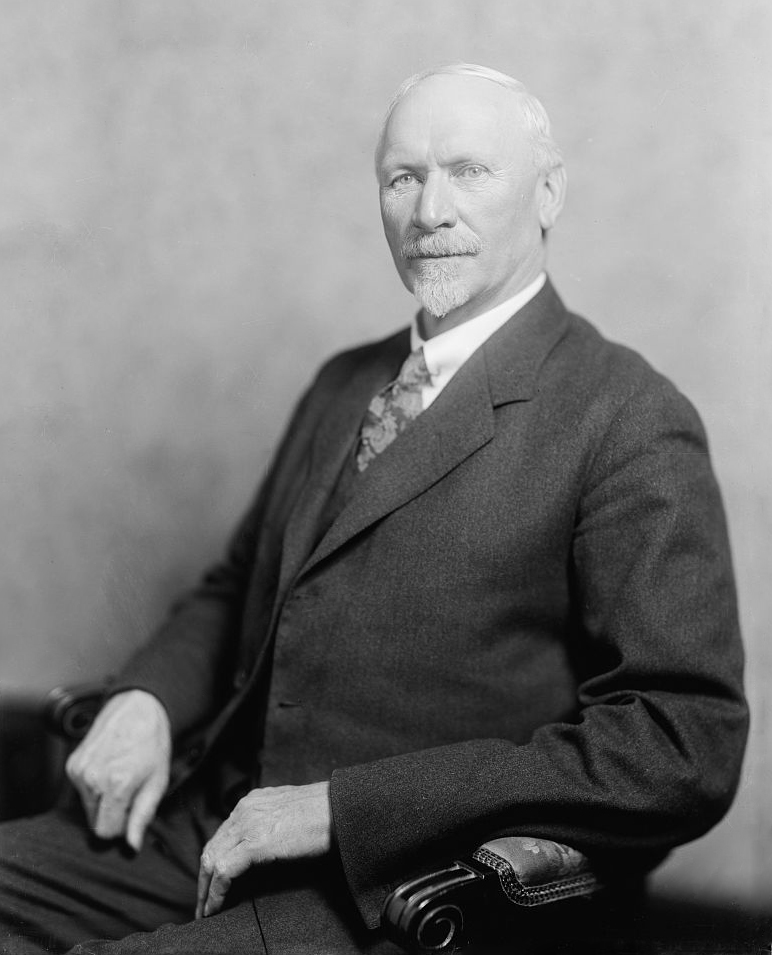
Our eyes were firstly drawn to the racist South African statesmen Jan Smuts; white supremacist and advocate of racial segregation who was invested in 1942. Of black Africans Smuts said: "These children of nature have not the inner toughness and persistence of the European, not those social and moral incentives to progress which have built up European civilization in a comparatively short period."


Smuts


He believed that black Africans were immature or incomplete as human beings, in need of the patronising guidance of white people - like 'special' children or clever pets. This was the white man's burden which he had manfully and heroically volunteered to take upon his shoulders, and for which it appears he was honoured by Aberdeen. Ugh.

In 1984, we attempted to put all that behind us by investing Nelson & Winnie Mandela. Good. Unfortunately, they did not show up for the ceremony. 


The 'Freedom' title in the modern era is, of course, purely honorary and ceremonial; intended to show that the bearer has performed exceptional service to the city and the community. People like Andrew Carnegie, who endowed our Central Library and Thomas Johnston, socialist politician, long-serving chancellor of Aberdeen University and creator of the North of Scotland Hydro Electricity Board - fantastic! Other names to be proud of include John Mallard - who was instrumental in the development of magnetic resonance imaging (MRI) and positron electron tomography (PET) - and Dugald Baird who did much for the health and liberation of women through the advancement of reproductive health, access to family planning services and obstetrics via his position of Regius Professor of Midwifery at the University of Aberdeen. (Though there is a bit of innuendo around Baird with regard to his alleged interest in eugenics.)

But the granting of honours like these can lay bare a cravenness in the awarding body - a forelock-tugging obsequiousness which hopes that a bit of the sheen of the awardee will rub off on the city. An inversion of the concept of bestowing an honor; the process becomes one of seeking the honour of endorsement by a notable figure of the dayFor this reason we see the honour being given to people who have never had anything to do with Aberdeen. People like Nelson Mandela, who we mentioned above, people like Sir Henry Morton Stanley ("Dr Livingstone, I presume") and Mikhail Gorbachev who, as far as we can see, was awarded the freedom of the city simply because he showed up one cold day in 1993. At least he did show up.

In recent years, we've also seen the honour being granted to showbusiness and sporting names; Alex Ferguson, for one. We also note that Buff Hardie, VIP (Very Important Pitmuxtonian) and some friends of his are Freemen of Aberdeen. We very much approve.
Looking Buff
In 1992 HMS Scylla, a Leander-class frigate, was granted the freedom of the city for the services she performed protecting Aberdeen fishery shipping during the Cod Wars with Iceland. Later, Scylla was deliberately sunk to become Europe's first artificial reef.


There she goes.

The awarding of the freedom to this artificial reef shows great foresight on the part of our city fathers, as today's predominant industry will, one day soon, become the world's largest archipelago of artificial reefs. Although this is not UK Oil & Gas' preferred route for the decommissioning of offshore oil and gas infrastructure - it is one which is already well-travelled. The oil-industry buzzword euphemism is 'derogation'.

Derogation in action

Thursday, 28 October 2010

March Stones 28 to 31 ABD - Borrowstone and Wynford - The Doupin' Stone

It's been a while since we visited stones 26 and 27 at Brotherfield, so it's good to get back in the groove tracing the markers of Aberdeen's medieval border.

It's a considerable physical gap between stones 27 ABD and 28 ABD too; two miles distance along the Brodiach Burn - which is a significant watercourse and was probably taken as sufficient marker of the Burgh boundary. So the council say, anyway, on their leaflet "Aberdeen's March Stones Trail" (PDF).

It's a beauty!
The Leopard Magazine has an excellent article on the history of the March Stones by Chris Croly, which we recommend. Suffice to say that, broadly, the March Stones mark the boundaries of the 'Freedom Lands of Aberdeen'. It is said that once Robert the Bruce had cleared the royal forests surrounding the city of all the interesting and valuable/tasty game, having no further use for the hunting grounds, he 'gifted' them to the Burghers of Aberdeen. For a yearly rent. Ha, some gift!

It actually comes as a surprise that, after nearly 700 years, the locations of the westernmost boundary stones remain rural and agricultural in character. In some cases, completely undeveloped. So, as we've said before, if you're going to go looking for these stones, you do so at your own risk. You will get wet and dirty, your feet will sink into bogs, you will tear your clothes (and possibly your skin) on barbed wire. You will find yourself clambering over consumption dykes and rubble cairns and you will become mentally and physically exhausted from the search. A moderate level of fitness (at least) is required. Moreover, you will need to get across farmer's fields, so check that you're familiar with the Scottish outdoor access code (PDF). Stones 28 to 31 are situated along the line of the Brodiach Burn and then Littlemill Burn, accessible from Blackburn Road which runs between the Skene Road and Clinterty, west of Brimmond Hill.


A field at Borrowstone Farm

28 ABD

Stone 28 ABD is on (very) boggy rough ground to the NW of Borrowstone Farm. We met a lovely asian couple tending their garden at one of the houses built just off the access road to Borrowstone. They were fascinated to hear about the March Stones and the fact that there was one very near to their house. They knew a bit about Robert the Bruce, of course, what with him being a world-famous historical figure and all, but it delighted them to learn about the personal and political connection he had to the parcel of land where they lived. The woman instantly grasped the psychogeographical background to our odyssey in search of the markers - she understood it was "anthropology and geography; the past tied to the present - all in one". The husband then tried to sell us the house! No really, he did.

Wynford Farm. Ring the bell and buy some beef.
Stone 29 ABD is about a kilometre farther north along Blackburn Road, in the SW corner of the field immediately north of Wynford Farmhouse. Wynford is an certified producer of organic beef, so the fields are usually occupied with livestock. Be sure to check in at the farmhouse and let them know what you're up to.

29 ABD
Stone 30 ABD is farther north along Blackburn Road again. Its in the SW corner of a field opposite the T-junction with the road which leads up between Brimmond Hill and Elrick Hill.

30 ABD
In the same field, to the NE, you can't miss Stone 31 ABD which marks The Doupin' Stone.

31 ABD and the Doupin' Stone
The Doupin' Stone was where candidate burgesses of Aberdeen were ritually humiliated as part of their initiation. In a ceremony which appears to be a bit like fraternal 'hazing', the novitiate - his backside (doup) bared - would be dropped repeatedly onto the stone in the presence of serving burgesses. We're not sure whether this procedure demonstrates homoerotica or homophobia on the part of the burgesses. No doubt they would then all get drunk - all boys together - just like rugby clubs today.

The medieval burgesses were a powerful group. In return for bankrolling the monarch, they were granted the privilege of enforcing his writ in the burgh by force of arms. They were a police and army and lawmaking body and local authority all rolled into one, with a royal mandate behind them. Their monopoly on force enabled them to enforce a monopoly on trade. They were the burgh.

Today, the Burgesses of Guild in Aberdeen is just a social club but with the cachet of high-status exclusivity, like a working man's club but for the bourgeoisie. It has this in common with the Seven Incorporated Trades of Aberdeen.

Saucer mark on Doupin' Stone

Witter (survey) holes on Doupin' Stone

View of Wynford from base of Brimmond Hill.

Monday, 11 October 2010

What are you doing?

Wandering down Holburn Street, the modernist eye is drawn to Trinity Hall, home to the Seven Incorporated Trades of Aberdeen.

They want us to call this "Trinity Corner". Does anyone?
The Seven Incorporated Trades of Aberdeen appears to be some sort of ancient society of craftsman guilds. So ancient, in fact, that they don't appear to have any sort of web-presence other than this treatise of 1887 by an insider

Previous location of the Trades Hall at the edge of Union Bridge.


Wikipedia tells us that the society comprises:

  • Bakers
  • Hammermen
  • Shoemakers
  • Weavers
  • Fleshers 
  • Tailors
  • Wrights and Coopers

How relevant is this to today's post-industrial globalised world and the intellectual property economy? Where does it fit into today's new-economy workplace of information wranglers, knowledge workers and social media mavens? 

Well... we suppose that the definition of Hammermen could be expanded to include engineering which is probably the predominant value-adding profession in the city today. However, while we're certain that there are a few bakers and butchers (fleshers) left in the city, we're pretty sure there are no shoemakers, coopers or wheelwrights (although, we would be happy to be corrected). The textile industry left the city recently, and shut the door behind it with a klang. However, there are plenty tailors these days in Aberdeen. We wonder how many of the refugee Kurds who've set up their splendid invisible mending and alteration shops towards the west end of the city centre are members of our secretive ancient society of trades guilds. Perhaps to ask the question is to answer it.


Angles 
Anyway, the Trinity Hall itself is an interesting-enough modernist building, quite modest and mannered, yet striking and angular with butresses and cantilevers, canopies and brutalist gables, periscopic skylights and brutalist dormers. Commercial premises leased out on ground floor units and a broad semi-public semi-plaza ensure that the building contributes to the mix of uses which has always characterised the urban environment of Holburn Street. 


Mixed-use, pedestrian-friendly, greenery. Splendid.

As I was doing the David Bailey bit on the front porch - bobbing about, looking for the best composition of the thrilling juxtaposition: "modernist cantilevered canopy versus salvaged gas standard" - a white middle aged middle class man of middling build and middling height emerged from the vestibule:

He: What are you doing?
Me: You can see what I'm doing. You can see me operating my camera. What do you think I'm doing?
He: This is private property.
Me: Yes. It is also in plain view from the street and pavement.
He: Yes but this is private property.
Me: I'm not arguing with that, but you seem to be suggesting that I don't have a right to photograph what I can see with my eyes from a publicly accessible space. Is that what you're suggesting?

With that, he went back inside, mumbling darkly to himself. And I regret that I missed the chance to properly ask the function of the Seven Incorporated Trades. My answer to his question "What are you doing?" should itself have been a question: "What is it that you do? Here, in your splendid modernist hall?" We expect they do a lodda work for charidee. But as always with such organisations, we expect that this charity work is a front - a fig-leaf, and that the true reason for preserving the medieval guilds is to provide a private place where capital and power might mingle, away from the prying eyes and scrutiny of the elecorate/proletariat. Unminuted, unminded, opaque. Indeed, where once the guilds were the pre-enlightenment analogue of the labour unions (albeit with elements of a secret society and a cartel rolled in), today, it seems from the type of folk we see attending (and their motors, which benefit from special paveparking privileges), that the secret society and cartel elements have come to the fore - it's like a local mini-CBI, but with extra invitation-only blackballing exclusivity.


So maybe it's time to call time on Aberdeen's Seven Incorporated Trades. Or time for reform. We've been thinking about it here in Other Aberdeen's splendid, extensive, upscale studios in the heart of prosperous downtown Pitmuxton and we've come up with some suggestions. We propose the new Post Industrial Incorporated Perceived-Value-Adding Activities of Aberdeen:
  • Tanning Booth Franchise Operators and Aesthetic Surgery Consultants
  • Life Coaching and Other Therapeutic Practitioners
  • Property Service Deliverers
  • Public Relations Gurus
  • Celebrities and their Wannabes 
  • Citizen Journalists
  • Fashionistas
  • Baristas
  • Dead People on Facebook


This will need refined - suggestions are welcome.