Showing posts with label ACSEF. Show all posts

Thursday, 17 November 2011

An Energetic Approach to Lingo Bingo and Greenwash

Last year, we wrote an indignant piece about local development quango ACSEF (Aberdeen City and Shire Economic Future) and their flagship cargo-cult real-estate project, "Energetica", which had then just benefitted from a relaunch.

The Energetica "leaflet" distributed at the time was, we said: "[a] self-satirising work of pompous cut-and-paste managementspeak buzzword grandiloquence [which] is both a plea by vested interests for development land to be released to construction companies and a sales brochure which sickeningly flatters potential buyers."
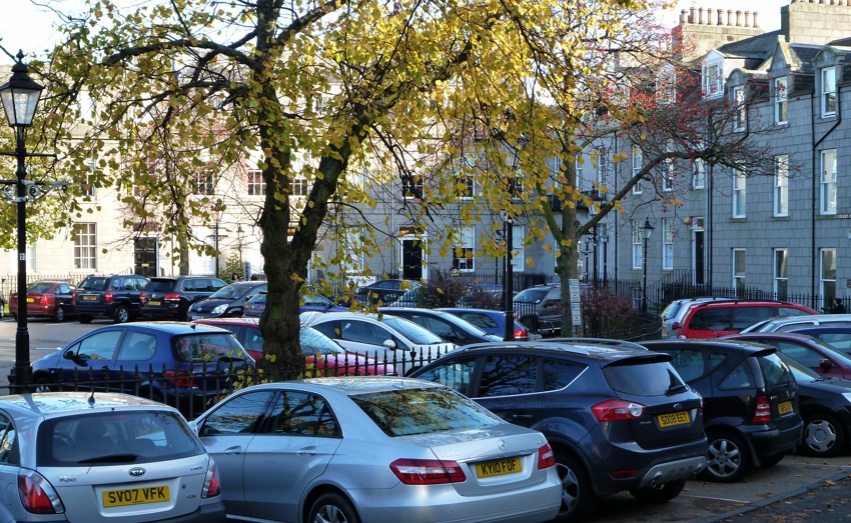
A Newburgh
Energetica Tenement

But we've been reading the peerless Auchterness blog, where we learned a much-needed thing or two about planning, so now we take it all back, all that nasty stuff we said about Energetica. For it seems that last year's relaunch of Energetica went so well that they've decided to have another relaunch this year, with a refresh of the offering and rebranding with new brochures to download from a smashing new website with a dot-uk-dot-com domain and everything.

And so we congratulate ACSEF on this re-launch, not least because it shows a praiseworthy evolutionary approach to the use of language in support of the promotion of real-estate ventures. Whereas the previous iteration of Energetica transparently telegraphed the oil-industry legacy of the ACSEF board members (last year we were instructed that the project would "stimulate synergies" and were invited to consider the "private sector vision" of "dynamic organisations"), today, things have moved on, oh yes, and an altogether more modern and forward looking and thrillingly emotional offering is published, ready for you to download in modern, exciting, PDF form here.

For on the Energetica website and in the lovely new brochure we were very thrilled to see a use of words which is designed to push the reader's psychological buttons - evocative words, expressive phrases laden with an abstracted emotional freight - words which connote a softer kind of power than that of the oil-service companies who are largely responsible for promoting this real-estate scheme. Here's the sort of stuff they're saying now:
"Here, now, and on the horizon" - "Inspired through a deeper understanding" - "If it can be imagined, it can be realised" - "Passion and opportunity should be shared" - "We should take responsibility for our world"
Yes, it's clear that - through their stewardship of the International Design Competition for the destruction of Union Terrace Gardens - ACSEF have learned a thing or to about peppering their publications with the very latest kind of Starchitect-style boilerplate. See - the Union Terrace Gardens debacle wasn't for nothing after all!

But above all, one of the most admirable aspects of the Energetica project is its greenwashing credentials - the use of the word "sustainable", for instance is a big favourite of our local oil company tycoons here in Aberdeen, and is highly evident on the Energetica website and brochure. There are, on the exciting, innovative, forward-looking Energetica interactive maps, little glyphs which denote the locations where a handful of wind-turbines might go in-between Aberdeen and Fraserburgh one day. Sustainability, see? And we all know that golf is a "green" activity (geddit?!), so it's heartening to see a preponderance golf courses decorating the map of Energetica - many indeed are the the chances afforded by these exclusive mostly-male bastions for high-ranking executives to discuss important matters in a low-pressure unminuted environment, away from the attentions of the busybody stickybeaks who just wouldn't understand the finer points of high-end real-estate dealings anyway. And as saviour of the future Mr Dr Donald Trump himself has said
...if I added the deals I make on my course to my portfolio then it would be a much bigger part of my business. If I didn't play golf at my course in Westchester County (N.Y.) then I wouldn't have four major buildings there. Owning a great golf course gives you great power.
We offer a word of caution, however, to ACSEF. We know how difficult it is for them to shrug off their existing high-carbon motorcentric and frequent-flyer world-view, but if they are to truly achieve world-class breakthrough greenwash, they should leave out (or at least de-emphasise) all their talk of the Aberdeen Airport Expansion project, which is mentioned in the brochure and on web-pages here and here and here. Moreover, they might consider leaving out (or at least not trumpeting quite so loudly) all their needy-pleading promotion of Aberdeen's mooted orbital motorway project (the AWPR - Aberdeen Western Peripheral Route) and the accompanying intended increase of capacity on the A90 trunk road to Ellon which are mentioned on the Energetica brochure and on the web pages here and here and here and here and here and here.

And a final word of advice. In attempting to issue a greenwashing press-release, when ACSEF speak on behalf of oil service companies who have leased a shed at the Energetica industrial estate, if they are to have us believe that these companies are truly the sort of enterprises which are committed to plotting an entrepreneurial course for Aberdeen "City and Shire" into a future beyond the exploitation of oil and gas reserves, its probably best if they stop referring to sustainable and renewable sources of energy as being "alternative energy". When executives with a background in oil and gas use language like that, it just gives the game away, see?

But, to sum it up, we congratulate ACSEF once again on their re-launch of Energetica. We think it's gone so well that they should have another re-launch, really soon.

More about Golf Greens than Green Energy


Wednesday, 6 July 2011

Bizarre Opaque Transparency from Aberdeen City Council.


////////////////////---------
>>>
Local government transparency 


 Getting council business out in the open will revolutionise local government and enable the Big Society. Transparency is the foundation of accountability. Local people should be able to hold politicians and public bodies to account over how their council tax is being spent, and decisions made on their behalf. It is also a powerful means of promoting efficiency, without requiring the heavy-handed intervention of an unaccountable bureaucracy.


>>>>>>>>>>>>>>>


>>>
City Garden - Project Monitoring Group

The role of the Project Monitoring Group is to oversee the City Garden project's progress and ensure that Council's interests, and that of the majority of Aberdeen citizens, are protected as the project progresses.

>>>>>>>>>>>>>


////////////


>>>>

City Garden Project Monitoring Group

Note of Meeting held at 9.30am on Friday 20 May 2011
Committee Room 5, Town House


<<<<<<<<<<<<<


>>>>


Sanitization and Redaction

Sanitization is the process of removing sensitive information from a document or other medium, so that it may be distributed to a broader audience. When dealing with classified information, sanitization attempts to reduce the document's classification level, possibly yielding an unclassified document. Originally, the term sanitization was applied to printed documents; it has since been extended to apply to computer media and the problem of data remanence as well.
Redaction generally refers to the editing or blacking out of text in a document, or to the result of such an effort. It is intended to allow the selective disclosure of information in a document while keeping other parts of the document secret. Typically the result is a document that is suitable for publication, or for dissemination to others than the intended audience of the original document. For example, when a document is subpoenaed in a court case, information not specifically relevant to the case at hand is often redacted.

Government secrecy

In the context of government documents, redaction (also called sanitization) generally refers more specifically to the process of removing sensitive or classified information from a document prior to its publication, during declassification.

Secure document redaction techniques

The traditional technique of redacting confidential material from a paper document before its public release involves crossing out portions of text with a wide black pen, followed by photocopying the result. This is a relatively easy to understand process and has only minor risks associated with it. For example, if the black pen is not wide enough, careful examination of the resulting photocopy may still reveal partial information about the text, such as the difference between short and tall letters. The exact length of the removed text also remains recognizable, which may help to guess plausible wordings for shorter redacted sections. Where computer-generated proportional fonts were used, even more information can leak out of the redacted section in the form of the exact position of nearby visible characters.

<<<<<<<<<<<<<<<<<<<<<


----ooo0ooo----


Regardless of the rights or wrongs, transparency or opacity, paranoia or caution which has motivated our elected local council representatives in our and their appointed executives minor provincial county town to undertake this 'redaction', it just looks bad. As one online commenter said:
Nice to see that everything is transparent so as to avoid the feeling of conspiracy and underhanded activity. Good confidence-building job. As ever.
But we have another point: the fact that this has been done should give us pause; should make us consider whether or not these people are suitably qualified, skilled, competent and suitable individuals to be trusted with the execution of this controversial project. We say this because we are not investegative journalists, we are not computer geeks, and we are not cryptologists - but nonetheless we managed to obtain quite by accident unredacted copies of the texts as we were preparing this post. Here are full, redacted copies of the minutes. If anyone wants copies of the unredacted text, you can contact us at otheraberdeen@gmail.com and we'll be delighted to oblige.


EDIT

Following our reportage of this hilarious mis-step, a local newspaper published this article, the and most of the redaction has been removed from the online copies of the minutes.
Thanks to blogger rxpell for the scan.


http://www.aberdeencity.gov.uk/nmsruntime/saveasdialog.asp?lID=38882&sID=16279

No blanks in that one.

http://www.aberdeencity.gov.uk/nmsruntime/saveasdialog.asp?lID=38884&sID=16281

The law firm name 'Brodies' has been blanked.

http://www.aberdeencity.gov.uk/nmsruntime/saveasdialog.asp?lID=38886&sID=16283

Again, the law-firm name 'Brodies' has been blanked.

We wonder why?


Tuesday, 19 April 2011

Woonerf for The Denburn Valley. Philosophy, Background and Site Visits.

On the day of the launch of a private-sector led design competition to re-shape the public realm space of central Aberdeen via a scheme which has as part of its parameters the destruction of Aberdeen's Union Terrace Gardens, we're delighted to be able to offer this alternative conceptual report into a vision which would retain Aberdonian's beloved city centre garden, and make the best possible use of the existing assets on the other side of the Denburn Valley - "Belmont Street Gardens", if you will...

Belmont Street Gardens

A couple of weeks ago, we laid out the beginnings of our vision for an alternative to the existing monolithic all-or-nothing take-it-or-leave it proposal for the redevelopment of Union Terrace Gardens and the east slope of the Denburn Valley opposite. That monolithic proposal was once know as the "City Square Project". Following public outcry at the very idea of destroying Union Terrace Gardens, the promotors of that project now wish it to be known as the "City Gardens Project". You can see what the PR gods have done there. The project is being promoted on behalf of local tycoon oil-man billionaire Sir Ian Wood by local development quango 'ACSEF' (Aberdeen City and Shire Economic Future).

Let's not throw the baby out with the bathwater.
Union Terrace Gardens is NOT the problem.

Denburn Dual Carriageway
Plus somewhere to put the bins.

Existing covered section - alienating.

TOP-DOWN

We are concerned that ACSEF's top-down agenda to impose one single expensive solution to what they perceive to be Aberdeen's town centre problems runs the risk of putting all our civic eggs in one heavily-indebted basket. We prefer a more iterative, yet paradoxically much bolder approach, and have so proposed that that the underused Denburn Dual Carriageway (which so blights the valley) be abandoned, ploughed up and turned into a single carriageway 'woonerf' with streetscape initiative build-outs, planting, street furniture, kiosks; all the usual stuff you might see in the centre of any similar-sized town elsewhere in continental Europe.

Human scale - places of refuge and community
St. Nicolas Street - outside M&S
A woonerf is a shared space urban landscape - it's a policy pioneered in the Netherlands in the 1970's. Woonerf is a term increasingly used in the English-speaking world to mean an area where motorists have priority equal to or lesser than other road-users, thus increasing the livability of the city at the human scale, even as residential and commercial-use density increases. Based upon principals of filtered permeability and shared space for transport corridors and thoroughfares these woonerf areas were pioneered in Groningen and other towns in the Netherlands, Flanders and Germany to encourage walking and cycling by giving them a more attractive environment free from traffic and a time and convenience advantage over car driving.

RE-EXAMINED

So, with our woonerf proposal in mind we re-examined the material on the City Gardens Project website. Once or twice in the past we've raised specific concerns about some of the aspects implicit or explicit in the material on the site, but over the last few days, we had the chance to examine in detail the presentation material on their website, specifically the input of Charles Landry (author of The Creative City: A Toolkit for Urban Innovators). You can download this material here:
We also refer to Scottish Government policy statement documents:
We also undertook site visits to Union Terrace Gardens and the footway (such as it is) which runs on the east side only of the Denburn Dual Carriageway. We also visited Aberdeen's existing woonerf exemplars at Belmont Street, St Nicholas Street and The Green.

URBAN DUAL CARRIAGEWAYS - A SOLIPSISTIC SOLUTION ONLY TO THEMSELVES

Where is everybody? No pavements, no cyclelanes.
Em. No cars, either.
As we already pointed out, the Denburn Road urban dual carriageway represents a problematical conundrum to Aberdeen. Barely used, it sits dog in a manger at the heart of the city centre's prime real estate, the footway used for the storage of refuse recycling bins. Lovely. So rarely is it used by motor traffic that what vehicles do use it invariably do so at excessive speed, the granite-canyon walls of the carriageways reflecting and reverberating their engine roar. We are given to understand (and this is hearsay, so take it as such) that the Denburn Dual Carriageway had been planned and drawn up many years before it became a reality, and was finally given the go-ahead as a goodwill gesture to the designer who was due to retire around that time. This ill-conceived piece of urban motorism actually has not one but two plaques commemorating its creation. How embarrassing.

Not one...
Now, as we begin to chew on the meat of the 21st century, this 20th century solution to urban transport looks more and more old-fashioned and shaming. Two schemes are currently officially proposed which will tackle this blight. Both appear to be aimed at providing the Denburn Dual Carriageway with more traffic. Firstly, we have the Berryden Corridor Urban Dual Carriageway project, which will link with the Denburn Dual Carriageway. Secondly we have the City Gardens Project, which has as one of its parameters the requirement to 'cover over' the Denburn Dual Carriageway - thus turning it into an urban motorway tunnel. Indeed the conceptual report (big pdf) into the (then) City Square Project shows some 500 parking spaces on two underdeck levels occupying the volume currently 'airspace' above Union Terrace Gardens. That would certainly put lots of traffic onto the Denburn Dual Carriageway.


but two...
We find that both of these officially proposed solutions are solipsistic - seeing motor-traffic transportation as being the desired outcome of providing infrastructure for motor-traffic transportation. This motorcentric philosophy with its reliance on and pandering to car-dependent obesogenic lifestyles is out of date and out of time.


MOTORCENTRIC "OLD THINKING"

Charles Landry said that "old thinking" is exemplified by attitudes and policies where the "car is king" whereas "new thinking" is partially characterised by urban planning policies where "the car is the guest". This, of course, is an explicit re-statement of the philosophy behind the Woonerf concept which we propose. In his presentation, Landry says that this "new thinking" based on "shared space" where the person - the pedestrian - re-captures the city from the car, helps create the acme of a city which can compete on 21st century global terms - a "humane city" with "distinctiveness" where people have a sense of ownership, where delight and enjoyment, participation and familiarity are encountered within human scale, liveable environments; "great places". It strikes us that what Landry said in his presentation stands in stark contrast to the irreversible monolithic single building (for that is what it would be) which the City Garden Project proposes.

Belmont Street - the car is a "guest". Can you see it?
Rather than "tear up the rulebook" as Landry exhorts planners to do, the advocates of the City Garden Project are flicking through that long-discredited rulebook of comprehensive re-development and urban dual carriageway schemes and coming up with the type of capital-intensive mega-building projects which have long been consigned to history elsewhere where more enlightened planning policy predominates. The perceived need to spend huge amounts of capital on this sort of regeneration is a fallacy. Indeed, as Landry said, shared-space schemes are a means of recapturing spaces in a very cheap way. One of the things which Landry says is a most important consideration relating to our urban experience is "what does it feel like?". How does it make us feel?

THE HAPPINESS AGENDA

Please excuse us while we quote the current Prime Minister, David Cameron:
Too often in politics today, we behave as if the only thing that matters is the insider stuff that we politicians love to argue about - economic growth, budget deficits and GDP.
GDP. Gross domestic product. Yes it's vital. It measures the wealth of our society. But it hardly tells the whole story. Wealth is about so much more than pounds, or euros or dollars can ever measure. It's time we admitted that there's more to life than money, and it's time we focused not just on GDP, but on GWB - general well-being. Well-being can't be measured by money or traded in markets. It can't be required by law or delivered by government. It's about the beauty of our surroundings, the quality of our culture, and above all the strength of our relationships.
Improving our society's sense of well-being is, I believe, the central political challenge of our times. 
An existing garden off Denburn Road
Right, sorry about that (feel a bit dirty now), but we completely agree with everything he said there. In his book "Cities for People" Jan Gehl, leader of Copenhagen's transformation into a walkable city, examines the necessity to encourage urban design from the perspective of the five senses (we would say six), taken at walking speed. This eye-level approach does much to address the needs -and happiness - of the individual and it is central to our critical approach to current proposals. There's no doubt that we have much to learn from continental Europe, but we also have something to learn from the developing world. In particular, we are aware of the Urban Happiness movement in Bogota, Columbia, and the spectacular advances they have made in creating happiness through livability and inclusive participation in Bogota for all the people, no matter their wealth or social status. Often it is pointed out that Aberdeen is the most socially stratified of Scotland's cities, so we should listen to what this movement has to say. The movement is spearheaded by former Bogota mayor Enrique Peñalosa. “There are a few things we can agree on about happiness,” he says. “You need to fulfill your potential as a human being. You need to walk. You need to be with other people. Most of all, you need to not feel inferior.” A key to equality is providing dignified, functional transportation, which Bogota has done with a powerful version of bus rapid transit as well as extensive bike and pedestrian networks. “When you talk about these things, designing a city can be a very powerful means to generate happiness,” Peñalosa says. By linking urban design to the economics of happiness, Bogotans have become happier. The murder rate fell by an astounding 40% during Peñalosa’s term and continues to decrease, along with the number of traffic deaths. Traffic moves three times faster now during rush hour. And the changes transformed how people feel.

SCOTTISH INITIATIVES

An existing garden off Denburn Road
As mentioned, there is much we can learn from our neighbours in continental Europe, and indeed a great deal of work has been done by policy makers at Scottish Government and quango level to provide frameworks for our planners to follow. The most recent of these documents "Civilising the Streets" (pdf direct download) specifically matches the needs and requirements of specific Scottish Cities (including Aberdeen) with the grass-roots liveability and urban environment initiatives undertaken in analagous cities in continental Europe. This sophisticated document provides specific conclusions and recommendations for the implementation of human-scale active travel and transportation policies in Scottish towns and cities. Read in conjunction with the policy documents "Designing Places" (pdf) and "Designing Streets" (pdf), we can conclude that our Woonerf proposal for Denburn Road would meet with political approval.

From "Designing Places":
The most successful places, the ones that flourish socially and economically, tend to have certain qualities in common. First, they have a distinct identity. Second, their spaces are safe and pleasant. Third, they are easy to move around, especially on foot. Fourth, visitors feel a sense of welcome. Places that have been successful for a long time, or that are likely to continue to be successful, may well have another quality, which may not be immediately apparent – they adapt easily to changing circumstances. Finally, places that are successful in the long term, and which contribute to the wider quality of life, will prove to make good use of scarce resources. They are sustainable.
Sustainability – the measure of the likely impact of development on the social, economic and environmental conditions of people in the future and in other places – must run as a common thread through all our thinking about design. Thinking about sustainability focuses in particular on promoting greener lifestyles, energy efficiency, mixed uses, biodiversity, transport and water quality.
A cantilevered cafe over Denburn Road,
looking across to Union Terrace Gardens.
We will integrate this.
We believe that the back lots of Belmont Street - the front lots of Denburn Road, have huge potential to fulfill these six qualities and that the only barrier to them doing so immediately is the fact that they face onto an urban dual carriageway. The fact that that urban dual carriageway is so sparsely populated with traffic is our opportunity to boldly seize the initiative and remove it once and for all, thus also removing its inhuman blight from our townscape. Once achieved, this reversion to a more human-scale streetscape will, as Landry promotes, provide a familiar and convenient space at a human scale in stark contrast with the inhuman alienation of an environment which is at present designed exclusively for use by machines. From being a dead space which specifically and intentionally excludes human activity, we will transform it into a "great street".

From "Designing Streets":
The process of street design offers an opportunity to deliver far more to our society than simply transport corridors. Well-designed streets can be a vital resource in social, economic and cultural terms; they can be the main component of our public realm and a core element of local and national identity. Well-designed streets can also be crucial components in Scotland’s drive towards sustainable development and responding to climate change. Attractive and well-connected street networks encourage more people to walk and cycle to local destinations, improving their health while reducing motor traffic, energy use and pollution.
Discovery, delight, access
We believe that the placing of the redevelopment of the Denburn Valley on our civic agenda in Aberdeen provides us with a once-in a lifetime opportunity to create a "great space" at human scale and minimal cost. Already many streetscape enhancing enterprises back onto Denburn Road. Bars, cafés, hotels, photographic studios, restaurants, high-end engineering consultancies and even a cinema (notwithstanding it's current difficulties) already have street-level access to Denburn Road - given the right streetscape these enterprises will thrive in the human-scale environment which a woonef has been proven time and again all over the world to provide. We should have that here.

ABERDONIAN EXEMPLARS

Bustle in heritage.
Too often, Aberdeen is characterised as exemplifying an insular "not invented here" attitude. That need not bother us in this case, for we already have successful examples of woonerf operating in the commercial heart of the town. In Belmont Street and St Nicholas Street, people walk the centre of the road untroubled by motor traffic - yet in Belmont Street motor traffic is not specifically banned - it has "guest" status. St Nicholas Street links well with the Belmont Street area through the St Nicholas churchyard, which is a green haven in the town centre. Most recently, an urban streetscape initiative has been implemented in "The Green" a historic part of our town.


Serenity and refuge
With our proposals for the Denburn Road area, we can link all these pedestrian-friendly areas together, and, moreover we can increase connectivity with other transport modes. Our proposals would have the east side of The Green terminate at the railway platform which currently serves the suburban service to Dyce. There are plans to greatly improve the suburban and exurban rail service to and from Aberdeen, and our proposals would integrate with that. At present the east end of The Green terminates in the Denburn Dual Carrageway, beyond which is a loading bay for the Trinity Centre shopping mall above, in turn, beyond that is the railway platform Our proposal to close the Denburn Dual Carriageway would re-develop the loading-bay space as Railway Station space and would fulfill the 150-year-old dream of providing direct access to Union Street from that Railway Station Platform via existing lift-shafts and stairwells at the Trinity Centre shopping mall. This scheme would also provide pleasant and direct access to the Union Square shopping centre and its huge car-park, obviating the need to bring any elevated levels of motor transport any farther into the town centre than that which we suffer already.

The east-end of The Green as it is today. It just stops.
Dual Carriageway, then loading bay. Then Railway Station.
But no access. We will fix that.
SUMMATION


Nooks and corners add interest and intrigue.
This is an imaginative and simple scheme; a low impact but high effect plan which radically alters the emphasis of our town centre away from motorcars, and provides space in a pleasant environment for commercial, retail and residential development. And all at very little up-front cost to existing businesses and residents. A little while ago we wrote about the return of a mixed economy to the towns and cities of the USA; a grass-roots sustainable movement of entrepreneurs providing goods and services in the new-economic realities of the 21st century. Our proposals for the Denburn Valley support this new vision of capital. Our proposal to turn an underused urban asset in the form of the Denburn Dual Carriageway into a "great space" which could be linked to Union Terrace Gardens by footbridges allows a modern and radical human-scale vision for Aberdeen's town centre. This is an achievable vision which allows for organic growth in business sectors making the best use of our splendid and iconic existing buildings.

Development opportunity.
Our imaginative proposals would put our town at the forefront of the new urbanism and would allow creativity to flourish at a human scale in a familiar and welcoming environment. This environment provides choices, promotes connectivity and provokes delight while retaining what is best about the built environment of our town. What is more, this proposal is a minimum intervention and allows enterprise to flourish sustainably from the grass roots, not by top-down once-only fingers-crossed-and-see-what-happens decree. In effect our proposals would turn the whole breathtaking scenographic vista of the entirety of the Denburn Valley transected by Rosemount Viaduct into an enormous (nearly) natural-topography entrance porch - a cultural crucible - for our town for those arriving by rail. This "sense of arrival" (per Landry) would make this town famous, and for better reasons than it is famous today. Maybe even the Denburn itself could run in the open once more, the living water flowing in the heart of our town, it certainly makes a picturesque scene further up its valley at the Grammar School.

In the grounds of the Grammar School
There are many options along the way: Our new plan to turn the existing dual carrageway into a new contemporary garden, the Denburn Valley Gardens (if you will) would encompass both east and west slopes of the valley, so some part of the gardens would always be in direct sunlight. The existing Victorian gardens would be fully retained at practically no cost, and when the sunlight moves off them, garden users can cross over to new, modern gardens on the east bank, terracing down from Belmont Street, accessed by footbridges over the railway line which itself would be retained lending scenographic drama to our showpiece city centre and displaying the latest railway technology. There need be no hurry to proscriptively pedestrianise Union Street, as by the agency of our scheme, private motorised transport in the town centre will simply wither away.

Indeed, once our scheme is up and running, seamlessly connecting the Green with the Railway Station; with Union Square and St Nicholas Street; with St Nicholas Churchyard and Belmont Street with Union Terrace Gardens - all at pedestrian scale with charm and delight around every corner - who would ever want to take their car all the way into the town centre ever again?


Just needs a bit of care.

ALREADY part of this beautiful vista seen from Union Terrace Gardens.

CODA

As part of our researches, we found that there's another woonerf already in existence in the Denburn Valley which could serve as a precident for our proposals. It's at Rubislaw Den South, very near the home of Sir Ian Wood, oil-man tycoon and backer of the City Gardens Project. It's lovely.

Existing Denburn Valley woonerf. 

Thursday, 17 March 2011

Biting the Hand.

Union Terrace Gardens as they are.
People who live in Aberdeen will not be unaware of the controversy surrounding the business-community-driven redevelopment of the town's famous Union Terrace Gardens. The intention had been to create a very large new civic square. Promotional efforts used the name "City Square Project". This redevelopment scheme has since been rebranded as the "City Gardens Project".


Original concept
Here at Other Aberdeen House, our personal greatest vexation with this proposed redevelopment was the way than an opportunity to anchor a progressive arts and creative sector in Aberdeen was so thoughtlessly as to appear maliciously squandered. The City Square proposals caused the collapse of the Peacock Visual Arts Northern Light initiative which would have created a new contemporary arts centre for Aberdeen and the north of Scotland. Those unfamiliar with the controversy can read comprehensive and in-depth analysis on Fraser Denholm's excellent blog: Blerr De Blerr Blerr.

The creative sector forms an impressively huge part of the UK economy, contributing as much in Gross Value Added as the financial services sector and is a predominant source of export revenue. With the securing of the Victorian & Albert Museum's northern outpost, Aberdeen's 'competitor' city, Dundee, is now poised to take a leading role in this economic sector for generations to come.

Over the last few days, the City Square Garden Project has launched a new promotional website, presumably with the intention of winning 'hearts and minds'.

Revised concepts
Browsing the pages of the site is an odd experience. We mentioned earlier that some of the use of language and content came freighted with information which we might infer about the promotors of the scheme to redevelop the existing Victorian-era Union Terrace Gardens and replace them with a hyperreal diorama of our town's heritage.

Then, we looked at the "Cultural Space" page. What most disorientated us was the use of these words:
Imagine ... mixing with art lovers and tourists
It took a little while for us to pin down just what it was that troubled us about this. Then we worked it out, we managed to unpack the statement. It's that conflation of "art-lovers" with "tourists". The promoters of the City Garden Project talk to readers of their website as if they are not the art-lovers. The implication is that art lovers are, like tourists, outsiders; they are 'other'. It is clear that they believe that the people of Aberdeen are not, therefore, art lovers. In effect they are inviting us to: "Come and look at the funny art lovers - aren't they strange?" They obviously cannot see how insulting this is. Their assumptions are showing, and, in turn show us that it is the promotors of the scheme who are themselves not art lovers.

Original concept
The promoters of the City Garden Project have, by use of this one sentence inadvertantly dropped the poker-face by which they had hoped to assuage the concerns of Aberdeen's beleaguered arts community. They have by use of this unguarded phrase exposed their bluff which attempts to revise project instigator Sir Ian Wood's ill-considered and temerarious words in Scottish newspaper The Herald:
... this is ... for the wider interests of people in Aberdeen who don't care about the arts. Eighty per cent of the people who spend time in the square will have no interest in the arts.
Revised concept
From such a local-press-lauded "man of vision", this displays a breathtaking lack of perspective. We hope not to fall into the trap of condescension, but we would point out that all people who participate in our civilisation are consumers of the arts, almost all the time. We live and work, relax and consume in an architect created environment; we listen to music; we read literature; we watch factual and dramatic films and television; everything we touch, wear or see has been brought into reality by a designer - these all are branches of the arts.

One of the ways in which anthropologists working at the edge between archaeology and paleontology discern the human condition in the artifacts they unearth at early hominid sites is the artistic content of the objects. Art is not strange and other, it is ancient and basic to the human condition. It is the fundamental fountainhead from which all other culture and civilisation emerges.

From the earliest rock art and clay fetishes, through the anatomically super-perfect and beautiful statuary of Ancient Greece, we discern, understand and participate in our world in the way we do because of the filters and guidelines which the artists of those artifacts have created for our cognition to follow. You do not "feast your eyes" on art. Rather, you feed your brain. The arts is the branch of human striving which provides the context for our society and civilisation to then fill with content. That we think the way we do; that we say the things we say; that we behave the way we behave is all the product of the artists who have provided us with the collective cognitive tools to interpret and interact with the world around us since the beginning of human civilisation.

When the controversy surrounding the redevelopment of Union Terrace Gardens was raging at its height, we remember hearing and reading opinions to the effect that the arts community should be careful not to "bite the hand that feeds it".

We would counter that by suggesting that it is rather those who propagate condescending material like some of the words on the City Gardens Project promotional website should be careful.

They should be careful not to bite the hand thats create the context in which civilisation thrives.

Thursday, 4 November 2010

An Apple of Gold in a Basket of Silver

Recently, there's been a lot of controversy about the proposed redevelopment of Union Terrace Gardens in the centre of Aberdeen.

As far as we can see, the 'City Square Project' is (was?) a speculative real-estate development proposal which would transform the garden in the city centre into an underground car-park and label its roof a 'civic square'. This reminded us of Aberdeen's Golden Square. Which now has it's own website. Yay!
(Maybe they'll get some content sorted out before the registration lapses next year.)

Golden Square in the 1867 Ordnance Survey 
Golden Square today
Yes (in common with what is proposed for Union Terrace by the boosters of the City Square Project) Golden Square was once characterised by a central garden area which is now given over exclusively to motor cars. And it's called a square.


We had a great laugh when we read a risible article on this pro-motorcar lobbying blog (beware popups, ugh!) which suggested that a Trevipark robot-controlled automatic underground parking system had been proposed for Golden Square. I couldn't help but remember a Thunderbirds episode from my childhood when a system like that was used by the characters - with disastrous consequences! Call International Rescue!

Thunderbirds

Trevipark

Aberdeen author John Aberdein touched on the cognitive dissonance provoked by the present configuration of Golden Square in his splendid satire on civic Aberdeen - Strip the Willow... Two characters are discussing the fact that Aberdeen fails when compared to its continental competitors for lack of a civic square. They then, of course immediately realise their mistake, and identify Golden Square as just such a continental-style human-scale civic square. They then bemoan the fact that it's given over to car-parking. They decide that the urban environment would be greatly improved by the installation of seats in the square - and then they point out that there are, indeed, usually dozens of seats in Golden Square - it's just that they're always exclusively locked away in metal boxes.

Plenty comfy seats. But locked in private metal boxes.
There was a moment, just a moment, when it seemed that Aberdeen City Council might return the centre of the square to human-scale (rather than motorcar-scale) use, but, unfortunately, it seems that financial mismanagement and the resultant ensuing austerity has lead to a kind of money-grabbing pragmatism. You can read more detail about it on rxpell's Moved To Comment blog. Thanks also to rxpell for this photo:


The statue of the Duke of Gordon (who he?) was placed in Golden Square in the 1950's. The statue is notable not for the person it depicts but for the fact that it was sculpted by a Thomas Campbell in 1841-2 of Dancing Cairns granite and so was one of the first statues to be cut in granite since the Ptolomies of ancient Egypt.

With a continentally-renowned concert hall, cafe-bars, restaurants, offices, cathederal, theatre, flats, and townhouses surrounding - in our opinion motor cars should of course be discouraged from entering Golden Square and North and South Silver Street. Golden Square could then be something really special; with Silver Street on either side, Golden Square could once again be described as the proverbial "apple of Gold in a Basket of Silver". The same goes for Bon Accord Square to the south of Union Street. Both those areas would then (if this vision were realised) make fine, human-scale, slightly bohemian (definitely Grecian) mixed-use urban-village type-things.

Isn't that what we all want?

Saturday, 7 August 2010

The A to Z of Aberdeen - E

E is for Energetica

Aberdeen's very own Local Development Agency quango ACSEF's flagship project is called "Energetica" and is a scheme to develop a "High-Tech-Corridor" between the Bridge of Don and Peterhead with the intention of "anchoring" the international Oil and Gas industry in Aberdeen and redefining the North East of Scotland as a "Renewables Hub".


ACSEF is an acronym for Aberdeen City and Shire Economic Future. Until last year it used to be an acronym for Aberdeen City and Shire Economic Forum. Before that, it was NESEF: the North East of Scotland Economic Forum. A moving target is difficult to hit.

There's much disquiet in Aberdeen about ACSEF and their involvement in driving the project for the comprehensive redevelopment of Union Terrace Gardens. Our favourite Aberdeen author John Aberdein wrote an open letter to concillors in the excellent citizen-journalist organ The Aberdeen Voice which sums up this disquiet perfectly. Well worth a read, so we recommend it.

Anyhow, what's all this Energetica stuff? What's it for? And what does it mean?

Let's have a look at what ACSEF say on their website (PDF):


The need [sic] for Energetica
There is no doubt that the aberdeen City and Shire economy is extremely successful. Headline indicators of economic performance, in terms of Gross Value Added and the level of average earnings, show it to be amongst the best performing areas in the UK. There are however genuine anxieties about the medium to long term competitive position of the region which need to be addressed now. The ‘tightness’ of the labour and housing markets, and land market generally, have created something of a constraint, a brake, on development. Additionally there are real concerns concerning the need to ‘anchor’ the oil and gas production base in the region as well as develop a relatively new technology base in the area. It is because of the need to address such concerns now, whilst there is some development time to address them, that the concept of Energetica has been developed.


Interesting. It's clear from this assertion that ACSEF considers 'success' to be the same thing as 'amount of money', and is lobbying for the release of greenfield development land as a way of ensuring that increasingly large amounts of 'success' can be made. There's more - much, much more in the Energetica 'leaflet' (PDF).

We thouroughly recommend that readers download the leaflet, print it out and keep it for the dark winter nights when everyone needs cheering up from time to time. It is quite astonishing that public money has been invested in the production of this self-satirising work of pompous cut-and-paste managementspeak buzzword grandiloquence. Side-splitting pencilneck lingo-bingo highlights include:

"Lifestyle Corridor"
"Stimulate synergies"
"Dynamic organisations"
"Private sector vision"
"Boasting world-class clusters"
"Creating structures at the leading edge"
"Challenging the current design perspective"
"Premises that reflect... aspirations and facilitate... business"
"Innovative world class business and recreational destination"

Digging through the bullschist, we see that, in effect, this entire exercise is both a plea by vested interests for development land to be released to construction companies and a sales brocure which sickeningly flatters potential buyers:

"These homes will reflect the responsible and caring approach of their owners, incorporating innovative solutions... reflecting the warm humanity found in the area."

Other highlights include plans for a "Hydrogen Highway", just as motor manufacturers worldwide begin to abandon plans for hydrogen-combustion engines and move towards the large-scale manufacture and marketing of electric vehicles.

Another is the stated intention to create "iconic", "landmark" buildings which will "anchor" the "corridor" at both ends.

In the context of this latter point, we had always thought that buildings became iconic landmarks over time and as a result of their evolving function within the context of their use by the community. A building will not be 'much loved' just because it's developer says it will be, honest.

Similarly, we have a queasy feeling about the entire concept of such a grand scheme as a means of securing a prosperous future for our region. We had always thought that endogenous (that is self-creating) economic growth and prosperity were a function of a well-educated and motivated workforce working in concert with innovation and entrepreneurship backed by easily-deployed capital (which is more than just money). It is not clear to us how what is essentially real-estate and road development scheme can provide these things, and all the literature that ACSEF have published does not address this key point.

Indeed, it looks like the whole Energetica strategy seems to be founded upon the premise "if you build it, they will come".

Ah! Yes! Now we can identify the source of that queasy feeling we mentioned: Energetica is a Cargo Cult.

Friday, 9 July 2010

ACSEF Clypes to Labour Party Bosses - UPDATED

I really, really, don't want to turn this blog into a campaign vehicle, but the pychogeographical comedy content of ACSEF's actions are well worth following. Their fancy dress surreal buffoonery is one of the things which makes Aberdeen a great place to stay! Never a dull moment!

It seems that, unhappy with the opposition to the City Square Gardens Project expressed by the likes of Labour Party members Anne Begg MP and Cllr Scott Cassie, ACSEF's board petulantly decided to write to their bosses clype...

Press and Journal

Plea to Mandelson over city gardens
ACSEF ASKED LABOUR LEADERS TO INTERVENE
BY CALUM ROSS

Published: 08/07/2010

LORD Mandelson and other senior Labour Party figures were asked to intervene in the row over plans to transform the centre of Aberdeen, it has emerged.

Aberdeen City and Shire Economic Future (Acsef) wrote to key Labour members “expressing concern” at the party’s local opposition to a proposed development at Union Terrace Gardens.

Labour councillors in the city were left “stunned” last night after details of the letter emerged in a minute of an Acsef board meeting on April 20.


As ACSEF continue to gather power to themselves, as their abitrary use of public funds to gain political influence continues unchecked and as our elected representatives continue to express surprise that this is how ACSEF behave, we can sit back and watch the comedy unfold.

The board’s chairman, Tom Smith, said: “Acsef is a public-private-sector partnership that is wholly non-political.

“Our sole remit is to help drive the economic development of our region.

“We wrote to members of the government in power at that time to make a strong case about the benefits of the city gardens project and the consequences to our local economy if this investment was lost.

“We will continue to approach any public-sector organisation including governments, local authorities and enterprise organisations that can assist us to deliver our vision for the north-east and to help ensure that Aberdeen city and shire remain a priority for investment.”

The minute of the meeting shows the letters were agreed by the private-sector representatives of the board.

They just can't see something if it doesn't make money, can they? They have mistaken money for value and they have confused affluence with wealth. The two things are quite different. It's amazing (disingenuous?) that Tom Smith asserts that his actions are not political.

In Paul Theroux's psychogeographical oddessy The Kingdom by the Sea, he describes the typical Aberdonian as the type of "person who would gladly pick a penny out of a dunghill with his teeth".

We owe ACSEF a debt of thanks for helping to confirm this long standing and stereotypical view of us!


EDIT - UPDATE

Other Aberdeen has obtained the text of the letter in question...


c/o Nessco Group Holdings Ltd
Nessco House
Discovery Drive
Arnhall Business Park
Westhill
Aberdeenshire
AB32 6FG

Tel: 01224 252000
Fax: 01224 213417
e-mail: acsef@scotent.co.uk

Mr Jim Murphy, MP
Secretary of State for Scotland
Scotland Office 
Dover House
Whitehall 
London
SW1A 2AU

14 April 2010

Dear Mr Murphy,

I am contacting you as chairman of ACSEF (Aberdeen City and Shire Economic Future) to express our concern over Labour’s approach to a major investment opportunity for the region.

ACSEF is a public private sector partnership which drives economic development in the region by bringing all the key players together to have a cohesive, consistent strategy to growing the economy and enhancing quality of life.

Towards the end of 2008, Sir Ian Wood announced his intention to pledge £50 million of his private fortune into a radical transformation of a strategic central location in Aberdeen city.

ACSEF took the lead in what has now become a £140 million investment project to make our city centre more attractive, greener, better connected and safer, stimulating the regeneration of Union Street and the surrounding areas which have suffered as a result of under-investment.

The City Square Project aims to create a new five acre civic space and gardens at street-level in the heart of our city with a further two acre all-weather concourse underneath by raising the under-used Union Terrace Gardens and covering over the unsightly Denburn dual carriageway and adjacent railway line.

To secure our economic future, safe-guard and create jobs for future generations, we must see a radical transformation of this region’s city centre.

This opportunity to significantly improve our city centre is a fundamental plank of what we need to deliver if we are to succeed in transforming our economy over the next five to ten years.

Over the past 35 years, we have built a very successful economy, with low unemployment, and a large portion of the jobs being skilled, with high average earnings. We have one of the best workforces in the whole of Europe in terms of skills, capabilities, and attitude. The major changes that have taken place to a great extent have been driven by North Sea oil. In the coming years, this will start to change drastically.

Right now we have a window of opportunity and if we let it close on us, we risk a downward spiral that will see a serious decline in our economy, the gradual loss of businesses and consequently jobs and quality of life.

In the next few years, companies who are serving UK and international markets will be asking themselves where they need to be located in order to best serve their markets in the future.


With many regions in the UK and Europe aggressively vying to attract inward investment, we can only compete if we have a city with a centre that serves our community well and can play a major part in helping us build a profile as being one of the top European Cities.

Despite the economic success of the region and its significant contribution to both the Scottish and UK economies there has been a lack of investment in the city centre and surrounding infrastructure by successive governments which has led to its deterioration.

Over 1,500 businesses, who helped shape ACSEF’s manifesto, cited the paucity of our city centre as a major barrier to attracting investment and people. Re-development and regeneration of the city centre is now one of our key priorities.

Recent research revealed that Aberdeen’s city centre was a “strategic weakness” in the city region’s competitiveness.

We have been surprised and concerned that the approach taken by our local Labour politicians particularly at MSP and MP level has been very unsupportive. It would appear that they have mis-judged the importance of the scheme to the long-term sustainability of the region and chosen to support what is perceived as being the more popular option.

We are now in serious danger of losing this £140 million investment. The damage that this could do to our reputation nationally and internationally and the potential negative impact on other investment opportunities in the region could be significant.

For various reasons, which we would be happy to outline to you, the City Square project has divided the public who have participated in a recent public consultation.

There is over-whelming support from the business community and its representative bodies (Chamber of Commerce, FSB, IoD and CBI) for this project and we would have expected a more measured and supportive approach from our Labour politicians, rather than what appears to be purely electioneering.

While public opinion has been divided over this project, the business community believes that we cannot be denied this significant opportunity because the real issues have been clouded by mis-information, some of which has been promoted by Labour, or influenced by vociferous opposition groups.

It is highly unlikely that we will ever again be in a position to secure £70 million of private sector investment for a civic project. We must be under no illusion that this money is available for other projects or piece-meal developments. Sir Ian Wood’s donation is the catalyst for a further £20 million of private sector investment which makes the possibility of £70 million of public sector funding much more realistic.

The region’s business community would like your assurance that the Labour Government is and would continue to be, if re-elected, supportive of jobs and prosperity and committed to investment in ensuring Scotland’s third city, which contributes significantly to the Scottish and UK economies, becomes a world energy city.

Yours sincerely


Tom Smith
Chairman

c.c. Lord Mandelson
c.c. Iain Gray, MSP


Oh dear. My amusement has turned to embarrassment.